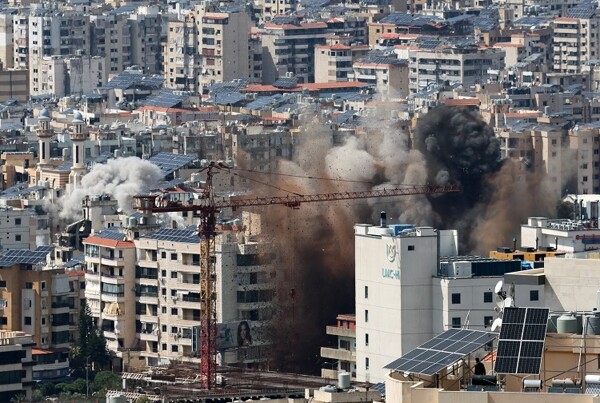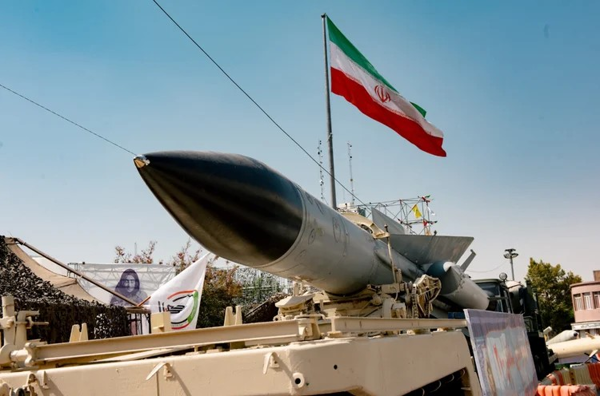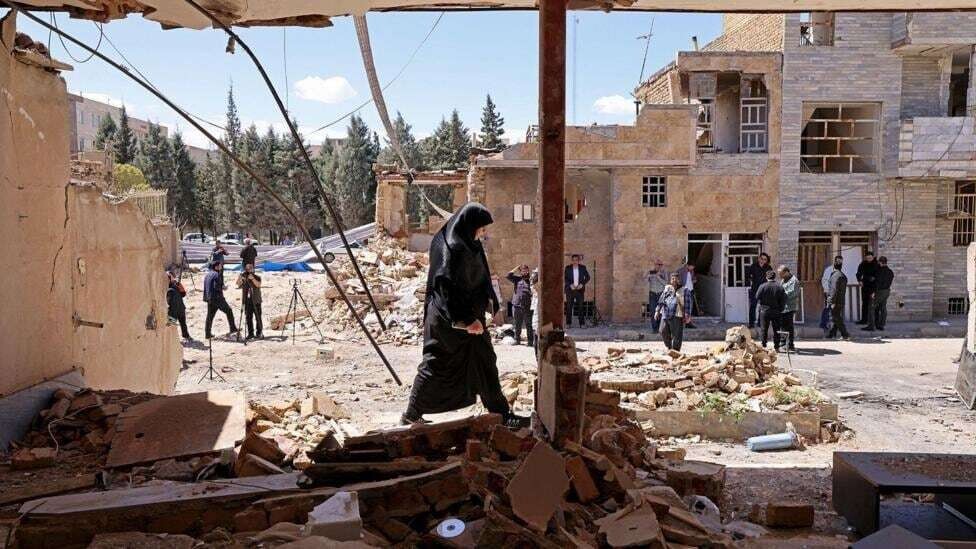
Iran must suspend the development of ballistic missiles, halt the production of long-range missiles, and end the transfer of drones and military exports to its representatives and allies in the Middle East. Part of Washington's justification for going to war was that Iran's advanced missile program had provided the country with a protective umbrella under which its nuclear program could continue. The Pentagon believes that much of that umbrella is now in ruins. General Dan Caine, Chairman of the U.S. Joint Chiefs of Staff, states that 80% of Iran's missile facilities have been destroyed, along with 80% of its air defense systems and 90% of its weapons factories. Iran has previously refused to discuss limits on its ballistic missile program. The circumstances have changed, and it remains to be seen if Tehran is willing to accept restrictions on missile and drone programs as part of a long-term agreement with the U.S. Minutes before the deadline it set for itself—and with the unprecedented threat to annihilate Iran's 'civilization'—U.S. President Donald Trump announced that a two-week ceasefire to halt the war had been agreed upon. The mediator, Pakistan, will host U.S. and Iranian negotiators in Islamabad for dialogue, possibly starting on Friday. Many issues remain unresolved, starting with the basis for negotiations. In a post on Truth Social, Trump stated that the U.S. had received a 10-point proposal from Iran, which he described as 'a viable basis for negotiating.' Iranian Foreign Minister Abbas Araghchi also mentioned the U.S. 15-point proposal, which, according to Trump's lead negotiators, could end the conflict. Neither proposal was formally presented, though versions of both have leaked and been published, which appear to be radically different in each party's expectations. Adding to the confusion is the White House's furious insistence that the Iranian plan being debated in the media is not the 'framework' that U.S. officials have received. 'Many details are not entirely clear,' Anwar Gargash, a senior diplomatic advisor to the President of the UAE, told the BBC. 'There are contradictory statements coming from Iran, from Washington, and from the Pakistani mediator,' he added. 'Therefore, we need to reconcile the details of these statements and understand exactly what the way forward is.' What are some of the central issues at stake? 1. Iran's demand for a ceasefire (and why it's being questioned) 'The end of the story.' Iran asserts that any future agreement must accept its right to enrich uranium for civilian use, as per the terms of the Nuclear Non-Proliferation Treaty (NPT). Oman, which had been mediating between the parties just before the war broke out, claimed there was a viable agreement on the table. Will the U.S. accept any form of enrichment? Trump's 15-point plan reportedly included several key demands: that Iran dismantle all its major nuclear facilities, end uranium enrichment on its territory, move its enriched uranium stockpiles out of the country, and accept exhaustive international inspections. But when directly asked about this, Pete Hegseth simply stated that Iran would 'never have a nuclear weapon or the capability to develop one.' Which is a slightly different answer. 2. Iran's nuclear program. The accusation that Iran was accelerating the development of a nuclear weapon has always been cited as Washington's primary reason for going to war, despite Tehran's repeated denials. At least publicly, U.S. officials seem to believe that the damage inflicted since last year's 12-day war and the current military attacks by the U.S. and Israel has been sufficient to require Iran a long time to rebuild a nuclear program that poses a threat. However, doubts persist about the fate of approximately 440 kg of highly enriched uranium that Iran still possesses. The uranium, which Trump frequently refers to as 'dust,' is believed to be buried under the rubble of Iran's Isfahan Nuclear Technology and Research Center following last year's devastating attacks on the facilities. 'His dust is deeply buried and guarded 24/7,' U.S. Defense Secretary Pete Hegseth told reporters on Wednesday. 'There will be no Iranian nuclear weapons.' A wave of Israeli attacks on Lebanon leaves over 200 dead; Iran denounces a 'serious violation of the ceasefire.' What's happening with the deal reached by the U.S. 3. Trump's rhetoric. Donald Trump's disruptive leadership style and highly unpredictable behavior are part of his modus operandi. His followers adore the 'madman theory' for its ability to disorient opponents and achieve previously unthinkable feats. While through threats of annihilation he may have secured a ceasefire, the war with Iran has tested his unique approach. From the shifting war objectives to his apocalyptic warnings, the conflict has threatened to undermine Trump's authority rather than strengthen it. The president has demonstrated he can start a war, but does he now have the temperament to end it? Click here to read more stories from BBC News Mundo. Subscribe here to our new newsletter to receive a selection of our best content of the week every Friday. You can also follow us on YouTube, Instagram, TikTok, X, Facebook, and our WhatsApp channel. And remember, you can get notifications on our app. 'And I don't think it will prosper in the end.' Donald Trump does not seem to have dismissed the idea that Tehran could charge tolls, and even suggested to ABC News that the U.S. and Iran could manage the strait as a joint venture. Government officials insist that as the U.S. depends very little on Persian Gulf oil, other countries should lead the resolution of the Strait of Hormuz issue. Last week, the UK presided over talks with more than 40 countries on how to unblock the Strait of Hormuz, and all participants agreed that the war must end first. With a two-week window of opportunity open, those talks could gain momentum. 'We will continue to work with the shipping, insurance, and energy sectors,' said UK Foreign Secretary Yvette Cooper in a statement welcoming the ceasefire. 4. The Strait of Hormuz. One of Iran's greatest achievements, besides the survival of the Islamic Republic regime, has been its ability to control the traffic of vessels through one of the world's most important maritime choke points. Iran's apparent willingness to reopen the Strait of Hormuz suggests that some of the pressures affecting the global economy over the last month may begin to ease. Iranian Foreign Minister Araghchi states that safe passage will be possible for the next two weeks, in coordination with the Iranian armed forces and taking into account, in his words, technical limitations. Since the start of the war, Iran has signaled its intention to impose new rules on traffic transiting the strait. Some media suggest that Tehran's plan includes the right to charge transit fees of up to $2 million per vessel, with revenues to be shared between Iran and Oman, the two littoral states of the Strait of Hormuz. For the Gulf states that transport their valuable hydrocarbons through the strait, this is unacceptable. 'It is totally unacceptable,' Anwar Gargash told the BBC, calling it a dangerous precedent for other vital strategic choke points around the world. 'I think this is going to be extremely dangerous.' 5. Lebanon and the ceasefire. In his social media post announcing the pause in fighting, Pakistani Prime Minister Shehbaz Sharif stated that the U.S. and its allies 'agreed to an immediate ceasefire everywhere, including Lebanon and other places.' Iran insists on a cessation of hostilities on all fronts, 'even against the resistance in Lebanon,' in reference to its Shia ally Hezbollah. But Israel does not share this view. In its own statement, the government of Israeli Prime Minister Benjamin Netanyahu was blunt. 'The two-week ceasefire,' it declared, 'does not include Lebanon.' With a large number of Israeli soldiers operating inside Lebanon and Defense Minister Israel Katz talking about destroying border villages with the same ruthless ferocity seen in the Gaza Strip, there are few signs that this front will go quiet. For now, Donald Trump seems to sympathize with the Israeli government's position. Lebanon is not part of the agreement 'because of Hezbollah,' the U.S. president told PBS's Liz Landers, adding that the war in Lebanon was 'a separate skirmish.' Point.