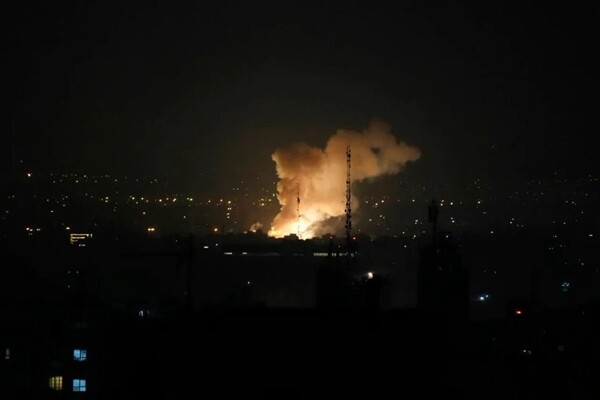
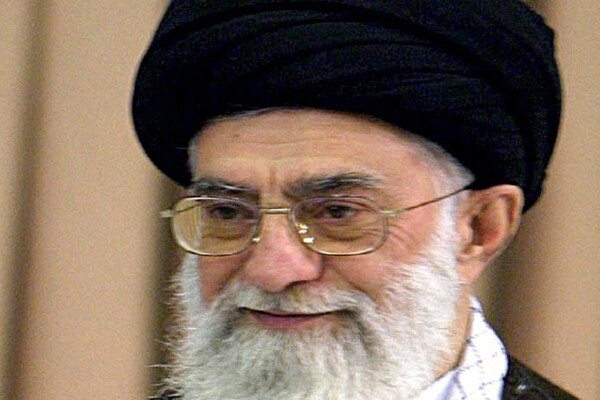
Tehran is trying to project a delicate balance: showing the capacity for response and regional deterrence, while avoiding a spiral that could risk the survival of the state itself. On the ground, however, the logic of war prevails. Following initial bombings, interruptions in communications, movement restrictions and a total closure of Iranian airspace were reported, as well as closures and restrictions in Israel and Iraq. In parallel, Iran again directly appealed to its security forces and the population, in an attempt to accelerate an internal break. The expansion to the Gulf raises the severity of the episode: it is no longer just an exchange between Israel and Iran, but a clash that directly involves U.S. military infrastructure distributed across the region. Internationally, the consequences are already being felt in air routes, logistics and markets. In Bahrain, the government confirmed that an installation associated with the U.S. naval presence was attacked, while reports circulated about impacts or attempted impacts on targets in Qatar, Kuwait and the United Arab Emirates. The White House, for now, maintains a rhetorical focus on the strategic threat and the argument of non-proliferation, while preparing for a campaign that could prolong if Iran sustains the pace of retaliation. However, the Iranian response, although forceful, left a signal that opened a diplomatic gap. The statement, of enormous political and symbolic weight, does not yet have independent confirmation and clashes with Tehran's official version, which previously held that its leadership remained safe. The Iranian response, however, was immediate and expanded the conflict: waves of missiles and drones against Israel and attacks on U.S. bases in neighboring countries, with reports of explosions and anti-aircraft activity in Qatar, United Arab Emirates, Bahrain and Kuwait. In his televised message, Netanyahu stated that the joint offensive damaged targets linked to Iran's nuclear operation, hit high command and will continue to attack 'thousands of targets' of the 'terrorist regime' of Iran. The narrative, in tune with similar calls from U.S. politics, aims to combine military impact with a political objective: to break command capabilities and, at the same time, stimulate internal fissures. On the U.S. side, President Donald Trump justified the offensive as an action to eliminate imminent threats and stated that his country seeks to destroy Iran's missile capabilities. Jerusalem-February 28, 2026-Total News Agency-TNA-Amid a military escalation that has already spilled beyond Iran's borders and directly impacted the Gulf, Prime Minister Benjamin Netanyahu assured via national broadcast that Israel has 'indications' that Iran's supreme leader, Ayatollah Ali Khamenei, 'is no longer among us,' following coordinated bombings with the United States on strategic targets in Iranian territory. For now, with missiles in the air and bases under attack, the region is on the edge of a major war. He also addressed the 'brave Iranian people' and stated that this moment opens a 'unique opportunity in a generation' to overthrow the current leadership. Foreign Minister Seyed Abbas Araghi affirmed that Iran 'is certainly interested in a de-escalation,' while calling any attempt at regime change a 'mission impossible.' The warning from Iranian forces was direct: any base or regional installation that, in their judgment, contributes to the offensive against Iran could become a target. That scenario materialized with attacks on U.S. installations in the Gulf. The air defenses of several countries were activated and recommendations for the population to remain sheltered multiplied. In Tehran, various reports spoke of cordoned-off zones and civilian nervousness, with lines for supplies and an atmosphere of uncertainty, fueled by the lack of verifiable information in real time. The fear, voiced in low tones, is that the conflict will turn into a war of attrition with episodes of high intensity, intermittent attacks and cross-retaliation. In this context, Araghi's phrase—de-escalation without regime change—clashes with the political line emerging from Washington and Jerusalem, where the discourse already mixes with the idea of accelerating an internal shift in Iran. Even so, the Israeli leader's message marked a turning point: it is no longer just about neutralizing military capabilities, but about striking at the heart of the regime's power. The statements came just hours after Israel and the U.S. launched large-scale attacks on Tehran and other cities, in an operation presented as 'preventive' against what Washington and Jerusalem describe as an imminent threat associated with the nuclear program, the development of long-range missiles and the regional architecture of Iran's allied forces. Energy sector analysts warn that, without clear signs of containment, crude oil prices could spike sharply in a few days due to the combination of geopolitical risk, insurance and potential impact on maritime corridors. The head of Iranian diplomacy suggested that his country is willing to talk if the U.S. seeks contact channels, though he clarified that, at this moment, 'there is no communication' in progress. The gap between these positions defines the dilemma of the coming hours: whether the priority will be to contain the fire or push it to the breaking point. Airlines suspended or diverted flights and oil-related nervousness reappeared with force.

Regional Escalation: Iran and Israel on the Brink of War
In response to joint U.S. and Israeli strikes, Iran retaliates against targets in the region, including U.S. military bases. The situation in the Persian Gulf is extremely tense, with experts warning of a sharp rise in oil prices. The world is watching events unfold that could lead to a large-scale conflict.