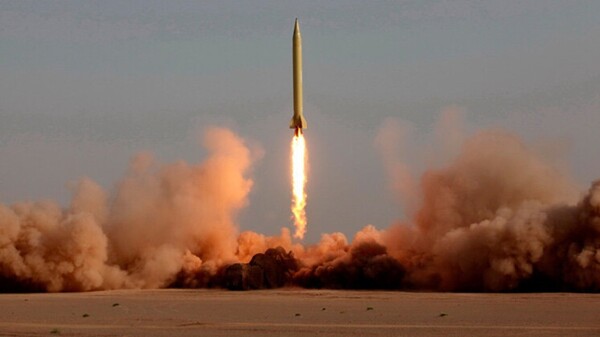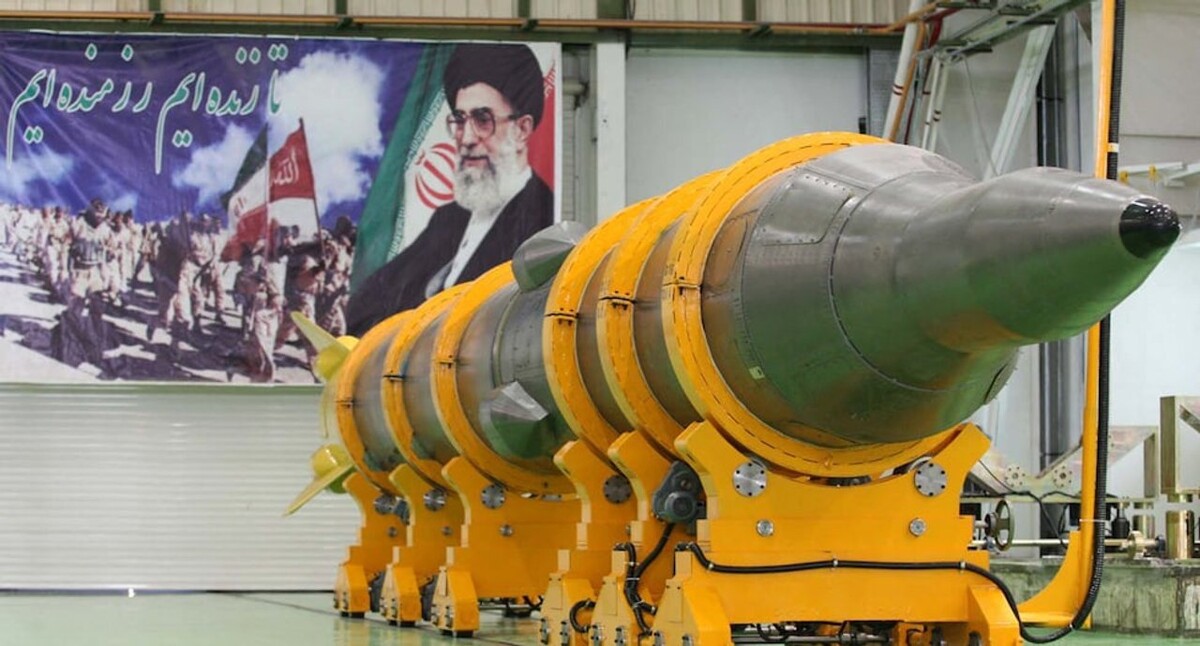
The Islamic Revolutionary Guard Corps (IRGC) announced on Sunday the first use of the solid-fuel ballistic missile 'Sejil' in a new wave of attacks against military targets in Israel, according to a statement released by Mehr news agency. This projectile, considered a 'strategic' piece in Tehran's arsenal, has a range of up to 2,000 kilometers, is about 20 meters long, and weighs 23 tons. The use of warheads ranging from 500 to 1,000 kilograms by the 'Sejil' missile elevated the alert level in air defense systems, given the destructive potential and rapid deployment speed of these units. While Israel announces new waves of bombardments in western Iran to neutralize these launch pads, the use of advanced ballistic technology positions the conflict in a stage of extreme technical and military tension. These attacks were precisely directed at air traffic control centers, military industries, and concentrations of Israeli troops, representing a qualitative leap in the intensity of crossfire. Before the incursion with the 'Sejil' missile, the IRGC had already carried out another series of bombardments with ten ballistic missiles and drones against US command centers and various strategic targets in the region, extending the impact area to the United Arab Emirates (UAE). The Iranian Revolutionary Guard Corps announced the first use of the solid-fuel ballistic missile 'Sejil'. From the Israeli government, Foreign Minister Gideon Sa'ar confirmed that the counteroffensive will remain active until the 'existential threats' posed by Iranian armament are eliminated. Its main operational advantage lies in the use of solid fuel, which allows for rapid launches from mobile platforms, a capability that was successfully tested in 2009 but had not been implemented in combat until now. Tehran is intensifying its offensive with state-of-the-art weaponry capable of reaching air traffic control centers and Israeli military industries.