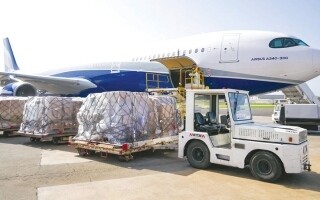
The war in Iran has triggered three market shocks that threaten to exacerbate humanitarian crises worldwide: currency devaluation, supply chain disruptions for fertilizers, and a sharp rise in oil prices. Since March 1, the global trend toward seeking safety has strengthened the US dollar, which is likely to make basic imported foods, such as wheat and grains, less affordable for a larger portion of the population. For those growing food crops near their homes, there is another shock: disruptions in fertilizer supply chains. As tensions between Hezbollah and Israel escalate, relief organizations were among the first to sound the alarm about potential humanitarian consequences. Concerns are also growing about the possibility of a large-scale exodus from Iran, where European leaders have warned of a potential influx of a large number of refugees. Rapid mobilization of funding and increased financial support could determine whether millions of people on the brink of survival will face a catastrophe. Shipping containers now face additional emergency fees of $3,000, while the World Food Programme warns that supply chain pressures are driving up the costs of life-saving operations. As markets reconfigure and supply chain disruptions reshape global humanitarian prospects, communities in the Middle East are bearing the direct brunt of the war. Over two decades, the international humanitarian relief body has become the centerpiece of global humanitarian logistics, coordinating crisis responses while keeping costs low. Today, as the conflict spreads and millions await food and shelter, the humanitarian system fears delays in aid supplies. In addition to direct violence, the war in Iran is causing three market shocks that threaten to worsen humanitarian crises globally: currency devaluation, fertilizer supply chain disruptions, and a sharp rise in oil prices. Since March 1, the global trend toward seeking safety has strengthened the US dollar, which is likely to make basic imported foods, such as wheat and grains, less affordable for a larger portion of the population. For those growing food crops near their homes, there is another shock: disruptions in fertilizer supply chains. As tensions between Hezbollah and Israel escalate, relief organizations were among the first to sound the alarm about potential humanitarian consequences. Concerns are also growing about the possibility of a large-scale exodus from Iran, where European leaders have warned of a potential influx of a large number of refugees. Rapid mobilization of funding and increased financial support could determine whether millions of people on the brink of survival will face a catastrophe. Shipping containers now face additional emergency fees of $3,000, while the World Food Programme warns that supply chain pressures are driving up the costs of life-saving operations. As markets reconfigure and supply chain disruptions reshape global humanitarian prospects, communities in the Middle East are bearing the direct brunt of the war. Over two decades, the international humanitarian relief body has become the centerpiece of global humanitarian logistics, coordinating crisis responses while keeping costs low. Today, as the conflict spreads and millions await food and shelter, the humanitarian system fears delays in aid supplies. In addition to direct violence, the war in Iran is causing three market shocks that threaten to worsen humanitarian crises globally: currency devaluation, fertilizer supply chain disruptions, and a sharp rise in oil prices. Since March 1, the global trend toward seeking safety has strengthened the US dollar, which is likely to make basic imported foods, such as wheat and grains, less affordable for a larger portion of the population. For those growing food crops near their homes, there is another shock: disruptions in fertilizer supply chains. As tensions between Hezbollah and Israel escalate, relief organizations were among the first to sound the alarm about potential humanitarian consequences. Concerns are also growing about the possibility of a large-scale exodus from Iran, where European leaders have warned of a potential influx of a large number of refugees. Rapid mobilization of funding and increased financial support could determine whether millions of people on the brink of survival will face a catastrophe. Shipping containers now face additional emergency fees of $3,000, while the World Food Programme warns that supply chain pressures are driving up the costs of life-saving operations. As markets reconfigure and supply chain disruptions reshape global humanitarian prospects, communities in the Middle East are bearing the direct brunt of the war. Over two decades, the international humanitarian relief body has become the centerpiece of global humanitarian logistics, coordinating crisis responses while keeping costs low. Today, as the conflict spreads and millions await food and shelter, the humanitarian system fears delays in aid supplies. In addition to direct violence, the war in Iran is causing three market shocks that threaten to worsen humanitarian crises globally: currency devaluation, fertilizer supply chain disruptions, and a sharp rise in oil prices. Since March 1, the global trend toward seeking safety has strengthened the US dollar, which is likely to make basic imported foods, such as wheat and grains, less affordable for a larger portion of the population. For those growing food crops near their homes, there is another shock: disruptions in fertilizer supply chains. As tensions between Hezbollah and Israel escalate, relief organizations were among the first to sound the alarm about potential humanitarian consequences. Concerns are also growing about the possibility of a large-scale exodus from Iran, where European leaders have warned of a potential influx of a large number of refugees. Rapid mobilization of funding and increased financial support could determine whether millions of people on the brink of survival will face a catastrophe. Shipping containers now face additional emergency fees of $3,000, while the World Food Programme warns that supply chain pressures are driving up the costs of life-saving operations. As markets reconfigure and supply chain disruptions reshape global humanitarian prospects, communities in the Middle East are bearing the direct brunt of the war. Over two decades, the international humanitarian relief body has become the centerpiece of global humanitarian logistics, coordinating crisis responses while keeping costs low. Today, as the conflict spreads and millions await food and shelter, the humanitarian system fears delays in aid supplies.