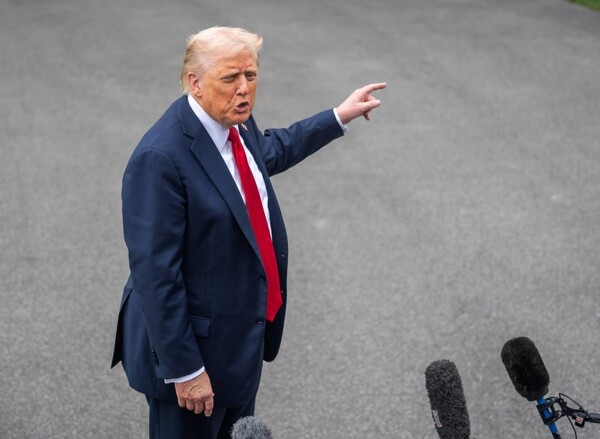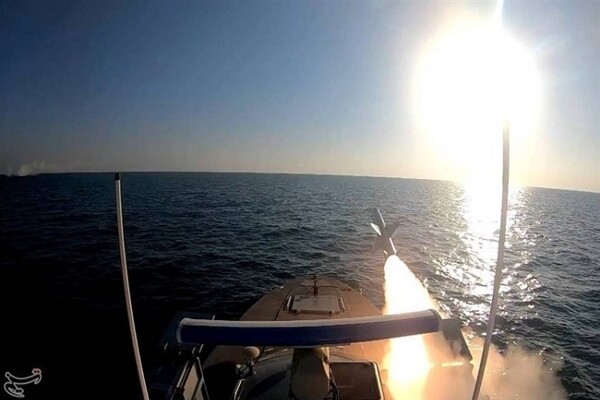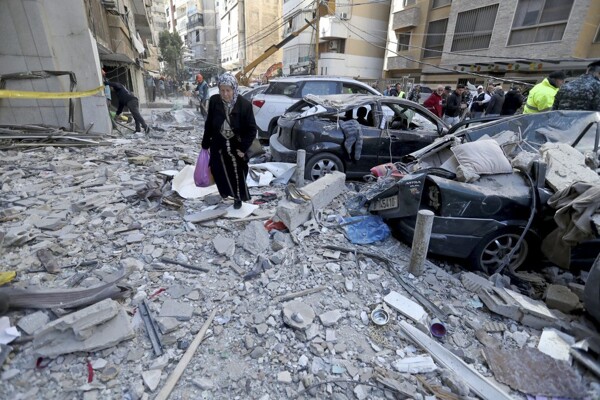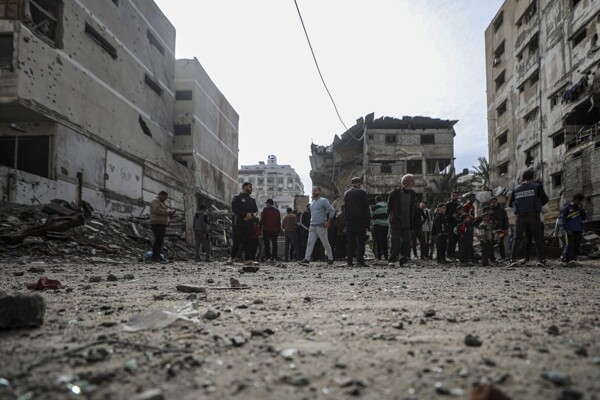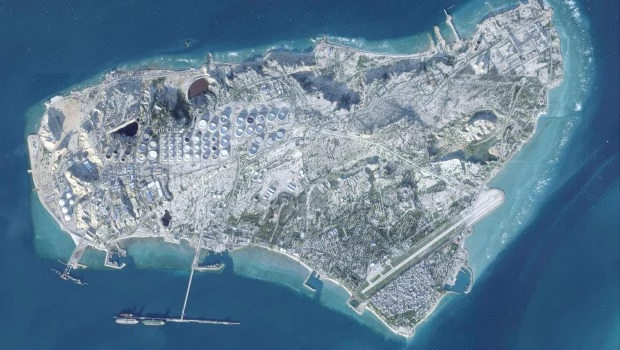
In recent days, Iranian pressure on this strategic passage and cross-attacks in the Persian Gulf have deepened fears of a major disruption to the energy market. The head of Parliament, Mohammad Bagher Qalibaf, had warned that an offensive on the southern islands would imply abandoning all moderation, while Iran's joint military command, through the Khatam al-Anbiya Central Headquarters, threatened to attack oil, economic, and energy infrastructure linked to U.S. interests across the region. The tension did not remain merely on a declarative level. If Iran insists on using the Strait of Hormuz as a geopolitical weapon, the United States appears ready to respond where it hurts most: the heart of its oil exports. In other words, Washington is preparing for a more extensive, complex war with growing regional risks. The backdrop remains the Strait of Hormuz. In the latest hours, Iran's authorities responded in a defiant tone. This is one of the reasons why Trump is trying to combine two messages: military punishment for Iran and a promise to guarantee free navigation. Meanwhile, the conflict continues to expand its human and regional costs. Israel maintained attacks on military targets and infrastructure in Iran and hardened its offensive against Hezbollah in Lebanon, where the humanitarian crisis is already showing dramatic figures of dead and displaced. These types of units not only serve for potential combat operations; they are also prepared to reinforce embassies, evacuate civilians, and respond to sudden crisis scenarios. According to the official, the attack avoided the actual oil infrastructure for now but sent an unequivocal message: if Iran or any of its allies interferes again with safe navigation in the Strait of Hormuz, that containment could end immediately. The threat carries extraordinary weight. The embassy had already renewed its security alert at level 4 for Iraq, warning that Iran and groups aligned with Tehran could attack U.S. interests again. In parallel, the Pentagon decided to reinforce its regional military posture. The island of Kharg, key to Iranian energy exports, and its potential complete neutralization would be a massive blow to an economy already battered by years of sanctions and isolation. Approximately one-fifth of the world's traded oil passes through this strait, so any prolonged disruption immediately affects prices, maritime insurance, supply chains, and global financial nerves. The attack reinforces the feeling that the network of pro-Iranian militias still retains the capacity to harass American targets even in high-security facilities. However, the deployment of more forces and the explicit threat to the Iranian oil network suggest the exact opposite: in Washington, they know that the next phase could be even more dangerous. Trump's warning thus leaves a clear picture. The official U.S. discourse insists that the blockade of the Strait of Hormuz should not generate strategic concern. And when a war begins to openly touch that vital nerve, the risk of a larger spillover ceases to be a distant hypothesis and becomes a concrete possibility. The warning came in an already explosive context: a missile hit within the U.S. embassy compound in Baghdad, while Washington ordered the deployment of about 2,500 additional Marines and the amphibious assault ship USS Tripoli to the Middle East. The new signal from the White House came after Trump stated that U.S. forces had hit military installations on the Iranian island of Kharg, a critical piece of the Islamic Republic's crude oil export system. Washington - March 14, 2026 - Total News Agency - TNA - The war around Iran escalated again this Saturday with a direct warning from President Donald Trump, who threatened to devastate Iran's oil infrastructure if Tehran maintains its pressure on the Strait of Hormuz, one of the planet's most sensitive energy corridors. In Baghdad, a missile struck a helipad inside the U.S. embassy complex, one of the largest and most protected diplomatic headquarters in the world. Images from the scene showed a plume of smoke rising above the premises. The dispatch of elements from the 31st Marine Expeditionary Unit and the USS Tripoli significantly increases the U.S. naval and amphibious presence in a theater where the USS Abraham Lincoln aircraft carrier and several destroyers were already operating in the Arabian Sea.