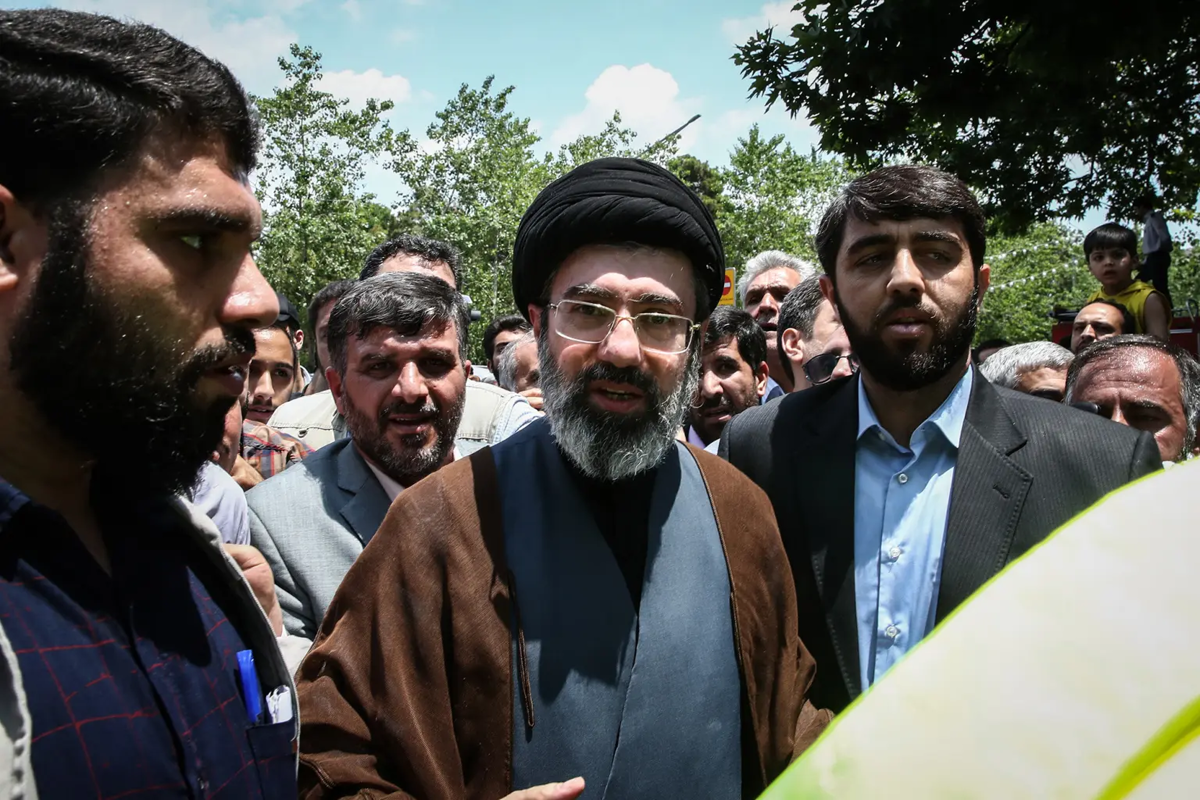
Iran is experiencing a period of unprecedented political instability following reports that Mojtaba Khamenei, one of the main candidates for Supreme Leader, was injured. This situation has revealed the fragility of the power structure in Tehran. US President Donald Trump publicly intervened in the matter, calling Mojtaba Khamenei's potential appointment 'unacceptable' for the United States, adding external pressure to an already tense internal process. For ordinary Iranians, the situation is met with a mix of fear, fatigue, and bewilderment. Mojtaba Khamenei's rise is seen as a defining moment: his supporters view him as bringing 'order' and 'coherence,' while detractors see it as the consolidation of a cycle of political closure and external confrontation. The support of the Islamic Revolutionary Guard Corps (IRGC) appears to be a decisive factor in this power struggle. The lack of official confirmation fuels speculation but also exposes a deeper truth: the heart of Iran's political-religious system is going through an unprecedented stage of fragility, with its center of gravity struck and its succession yet to have a fully consolidated figure. Reports also indicate that Zahra Haddad Adel, Mojtaba Khamenei's wife from a family historically linked to the country's theocratic elite, was also killed in the attacks. A loss of this magnitude impacts on a personal level but also on the web of loyalties that sustain the candidates in the race for the regime's pinnacle. Mojtaba Khamenei is known for his low public profile and his operational influence within the internal workings of the Iranian state. The question now is twofold: whether Mojtaba Khamenei retains the physical and political capacity to compete for succession, and whether the regime—struck and watched from within and without—will manage to order its chain of command before uncertainty turns into a greater factor of instability. The internal power struggle in Iran took an explosive turn in recent hours: Mojtaba Khamenei, son of the late Supreme Leader Ali Khamenei and long considered one of the top favorites to inherit power, was reportedly injured in an airstrike attributed to Israel at the start of the joint offensive launched on February 28, according to journalistic reports cited this Saturday by international media. The information states that the 56-year-old Mojtaba Khamenei survived an attempted selective elimination within the framework of the Israeli operation known as 'Roar of the Lion,' coordinated with the US offensive called 'Furious Epic.' And there, according to reports, there are doubts and resistances to a transition that, in fact, could be interpreted as hereditary, a sensitive aspect even for a system that combines theocracy with its own institutional mechanisms. While the regime attempts to contain the impact of the blow and reorganize its command, the succession crisis has also become a field of narrative dispute for the United States. If confirmed, the data would be significant: in the symbolic architecture of Iranian power, family ties and internal alliances weigh as much as political trajectory. In that first wave—always according to reports—Ali Khamenei died along with other high-ranking leaders of the Islamic Republic, which was presented as a blow aimed at decapitating the regime's strategic leadership. Details about Mojtaba Khamenei's health status remain shrouded in uncertainty. The extent of his injuries or the exact place where he has been taking refuge since then has also not been specified. Within the system, he is identified with a line of hard conservatism, ideological continuity, and a markedly anti-Western stance, in tune with the imprint that distinguished his father for decades. The discussion on who will be the next Supreme Leader is not an abstract dispute: it can define whether the country seeks a negotiated exit or deepens confrontation; whether it prioritizes internal stability or hardens further; whether it opens a minimal margin to rebuild regional bridges or if it entrenches itself. Influential sectors of the security and defense apparatus would consider him the most 'reliable' candidate to guarantee continuity and protection of accumulated interests, particularly in a context of war and international pressure. And each partial piece of data, as well. It is unclear if he was with his father in the attacked complex or if he was the target of a separate blow. However, succession is not defined solely by internal muscle. Tehran, March 7, 2026 - Total News Agency - TNA-. The formal process depends on the Assembly of Experts, an 88-member body in charge of appointing the Supreme Leader.