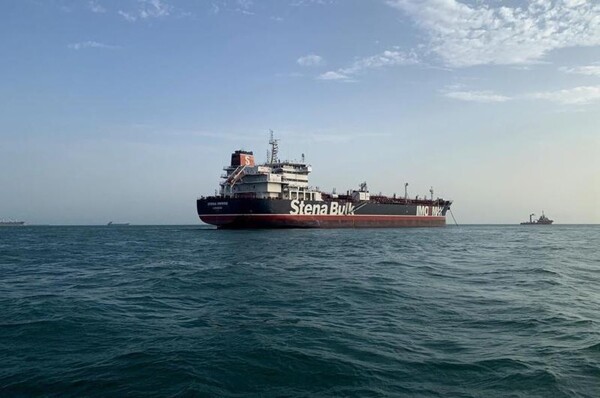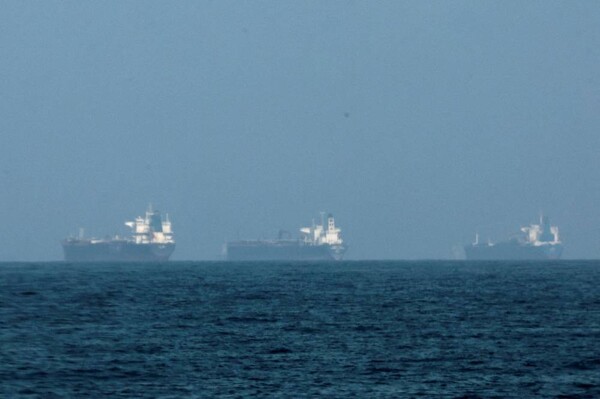
Insurance markets reacted swiftly by raising premiums, leading to higher shipping costs and increased inflation risks globally. Reports indicate that traffic has already decreased, with dozens of ships halting near the strait. In modern energy markets, high insurance costs can quickly close a strait. Most crude oil passing through the Strait of Hormuz is headed to Asia. Emerging Asian economies are particularly vulnerable, as many have fuel subsidy systems. Rising import costs will pressure financial reserves across the region, and if geopolitical risk strengthens the US dollar, imported inflation will worsen. The 1970s showed how energy disruptions can reshape economic trajectories. Natural gas markets are more volatile and less flexible. About a fifth of global liquefied natural gas (LNG) trade passes through the Strait of Hormuz. This makes intermittent disruption more likely than a permanent blockade, but even intermittent disruption could be enough to destabilize markets. The question now is whether Asian economies, more diverse and technologically advanced, can avoid similar dynamics or whether energy dependence will remain the critical constraint. However, a full and sustained closure of the strait would be difficult and costly. In recent years, nearly four-fifths of oil from the strait has flowed eastward. Yet, neither of the existing alternatives fully compensates for the reliance on the Gulf. Supply Integration. Russian supplies cannot replace Hormuz volumes on a large scale, and drawing on reserves provides only temporary relief. For decades, policymakers have recognized this vulnerability, but few believed it would materialize on such a devastating scale. Risks of the current crisis escalated sharply on February 28, when a joint US-Israeli military operation killed Iran's Supreme Leader, Ayatollah Ali Khamenei, prompting retaliatory strikes. The resulting conflict extended to the Strait of Hormuz, turning this strategic passage into an active war theater and a geopolitical battleground. Central banks across Asia, which have recently regained partial control over inflation, face the choice between price stability and supporting growth. Warnings to ships attempting to cross the strait have turned the crisis from a mere risk into a practical threat. Undeniably, this threat reveals structural risks, especially for Asia. About 20% of global oil and a similar share of seaborne LNG trade pass through this narrow waterway between Iran and Oman. In 2025, approximately 20 million barrels per day, or about $600 billion in annual energy trade, flowed through this passage. However, China has taken some steps: Beijing has expanded its strategic oil reserves over the past decade specifically to mitigate external shocks and increased its imports of discounted Russian crude oil since 2022 as a partial hedge against shipping disruptions. Qatar, a key supplier to both Asia and Europe, also relies on these routes. Moreover, the crisis casts a shadow over Beijing's broader ambitions. The energy corridors enabled by its Belt and Road Initiative through West Asia were designed to deepen supply integration, not to operate amid military confrontation. Furthermore, efforts to expand oil trade priced in Chinese yuan depend on predictable shipping flows. Lateral pipelines to the Red Sea and the Gulf of Oman have been developed. Prolonged disruptions confirm a long-standing truth Beijing has sought to mitigate: China's energy security remains tied to contested maritime routes outside its direct control. LNG infrastructure is characterized by rigidity: liquefaction capacity is fixed, contracts are destination-specific, and storage reserves are limited. If gas shipments are delayed or constrained, Asian buyers will directly compete with Europe for alternative supplies, leading to price spikes. The costs of electricity, industrial production, and fertilizer production will rise rapidly. Rising oil prices primarily affect transportation costs, while rising gas prices impact the entire global economy. Ultimately, shipments can be rerouted, and production can be gradually increased elsewhere. These routes offer partial relief but cannot fully compensate for Hormuz flows. The United States maintains strategic flexibility thanks to its domestic shale oil production and LNG exports, but Asia does not enjoy the same flexibility. The region's economic growth has been driven by imported oil. Typically, a $10 increase in crude oil prices raises general inflation by several tenths of a percentage point. Expanding Impact. Rising LNG prices affect power generation and food production, expanding the scope of impact. In an era marked by escalating US-China competition and the fracturing of geopolitical alliances, this dependency gains new strategic importance. If the current crisis persists, it will not be just another cyclical commodity price surge but will expose the structural underpinnings of the post-Cold War Asian growth model and its latent geopolitical risks. Asia's strategic independence may turn out to be narrower than its economic influence suggests. Emerging Asian economies are particularly vulnerable, as many have fuel subsidy systems, and rising costs will pressure financial reserves. Japan and South Korea import over 80% of their energy needs, and Taiwan and Singapore face similar structural risks. The specter of sustained high energy prices has revived inflation fears. Charter rates for giant tankers on Gulf-to-Asia routes have risen. Despite oil market volatility, they have some protective barriers. The main shipping lanes lie within the territorial waters of Iran and Oman. China, India, Japan, and South Korea receive most of these imports. China buys most of Iran's 1.7 million barrels per day in exports and heavily relies on two additional Gulf suppliers whose cargoes also transit the Strait of Hormuz. Japan and South Korea import over 80% of their energy needs, and Taiwan and Singapore face similar structural risks. During the 1980s 'Tanker War', attacks on maritime vessels prompted the US to send naval escorts, conduct large-scale maritime security operations, and eventually resume traffic. Furthermore, Iran exported about $67 billion worth of oil last year, meaning a prolonged closure would also shrink its revenues. The strait is deep enough for fully laden supertankers, making it essential for the region's exporters. Even without an official blockade, drone strikes, missile threats, and maritime harassment can make crossing commercially unviable. The strait does not need to be physically closed to be economically disrupted. About 3,000 ships pass through it each month. The Strait of Hormuz is about 33 kilometers wide at its narrowest point. If the Strait of Hormuz remains threatened and constrained due to war, Asia will face its most severe test of energy security since the 1973 oil embargo.