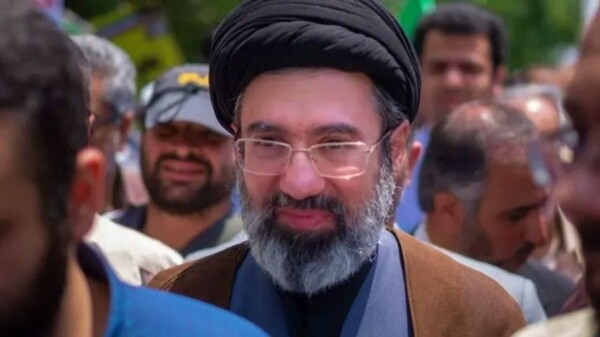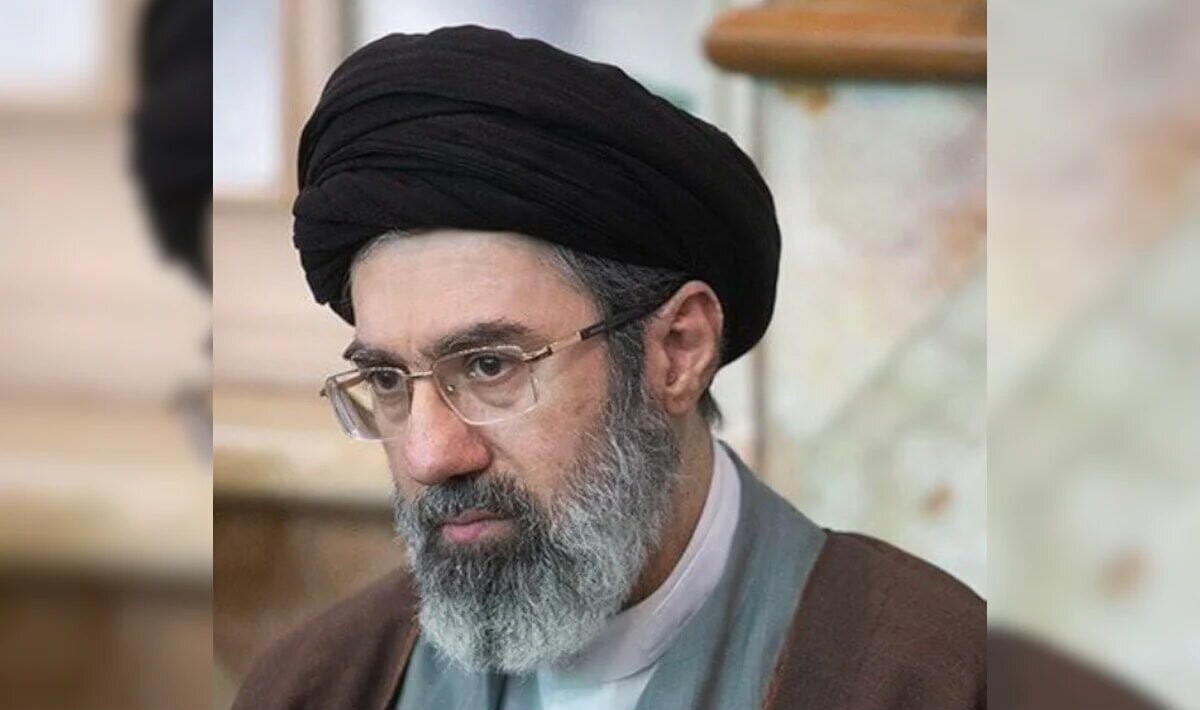
In Iran, during the joint offensive operation by the United States and Israel, the Assembly of Experts elected Mojtaba Khamenei as the new Supreme Leader. This decision was made on the fourth day of military operations and aims to fill the power vacuum following the death of Ali Khamenei and to send an immediate signal of regime continuity. According to international reports, the attacks targeted facilities associated with the Assembly of Experts in Qom, the constitutional body responsible for electing the leader. The regime will attempt to use the argument of 'national unity' to shield itself: with a new leader, it will seek to close ranks, reinforce controls, and present any dissent as treason in times of war. For the regime, the calculation is clear: to show continuity today to survive tomorrow. In the regional context, the arrival of Mojtaba Khamenei may reinforce, at least in the short term, the logic of confrontation that the regime cultivated for decades: exporting influence, armed allied networks, and a foreign policy that often needs enemies to justify its own internal survival. The election of the new Supreme Leader also comes as Iran faces pressures on multiple fronts: direct attacks, a long-standing economic crisis, social discontent, and a recent history of severe repression. For the rest of the world—and for many Iranians—the question is just as clear: if the system chooses to consolidate a dynastic succession under military tutelage, what real margin is left for political opening, a credible institutional exit, or a change not imposed by force? The regime needs to show unified command while facing bombings on military infrastructure and decision-making centers, attacks on its chain of defense, and an internal climate of fear, indignation, and accumulated frustration. With Mojtaba Khamenei in the post, the conflict enters a different phase: the war no longer discusses only military capabilities, but the very heart of the regime and its continuity. The designation has an immediate effect on the population: fear mixes with anger. The decision, made under maximum military pressure with the country being hit by airstrikes in different points, opens a chapter as decisive as it is controversial: the theocracy that for decades rejected the idea of a de facto monarchy is, in fact, closer to a family succession than to a transparent and representative process. For Iranian society, this usually means more locks, fewer freedoms, and a more rigid horizon. The transition is also accelerated by an element that worsens the institutional climate: the blows on spaces linked to the succession. In this framework, the designation aims to prevent the fragmentation of power—an existential risk in times of war—and to sustain the narrative of 'stability' that the system always promised, even when its political and religious legitimacy has been eroding for years. But the choice also deepens an original wound: the 'Islamic Republic' was born preaching 'revolution' and 'purity,' and today it reorganizes around a surname. In Washington, President Donald Trump has already spoken of a 'power vacuum' and claimed that previous attacks would have eliminated possible successors of the old leader, a message that not only seeks to show military effectiveness but also to sow uncertainty in the Iranian command. In political terms, attacking—or even just threatening—the selection mechanism is a form of destabilization: the goal is not only to reduce military capabilities but also to disrupt the 'center of gravity' of the regime. The IRGC is not just another actor: it is the armed, economic, and intelligence muscle of the system, and also its main political guarantor when the regime stumbles. It is political: governing an exhausted country, with deteriorated legitimacy, and doing so under the umbrella of a war that can extend and make everything more expensive, from energy to daily life. The regime sought to resolve in hours what would normally be a delicate transition. In the language of the regime, it is about continuity. And in a region where the word 'succession' is usually synonymous with stability, in Iran it can become synonymous with rigidity: a regime that responds to the historical challenge not with reforms, but with more of the same, now signed with a surname. On the Iranian street, for many, it sounds like a corporate closure of power: the same ones as always, with the same project, shielded by an armed structure that is not accountable. In the corridors of Iranian power, the role of the Islamic Revolutionary Guard Corps (IRGC) appears as the decisive data. In this context, the main risk for Mojtaba Khamenei is not only military. In these days, even critical sectors of the system that expected a change are trapped by the harsher reality of war: the bombings do not have surgical precision in a densely urbanized country, and each attack feeds the collective trauma. The figure of Mojtaba Khamenei, a low-profile cleric outwardly but long pointed out for his internal influence, embodies precisely this displacement. With Mojtaba Khamenei designated, the system tries to quickly close that window of vulnerability, even though the risk of internal fractures does not disappear. The figure of the new Supreme Leader also adds a particularity that makes the debate more sensitive: Mojtaba Khamenei arrives with a visible institutional career comparable to that of other top clerics. For a country under fire, this agreement can sustain the structure. In a regime where the 'office' is based on religious authority and political leadership, that combination can work inward, but it increases rejection outward and feeds the perception of a system that is increasingly closed, more family-based, and less republican. In the capitals of the West and the Gulf, the reading is not long in coming: a family-based succession could harden the regime's political line and reduce the margin for a negotiated exit. His power, according to multiple previous reconstructions, was built behind the scenes: networks within the religious apparatus, links with security sectors, and arbitration capacity within the leadership circle. He chose to close the vacuum quickly, even if the cost is to deepen the image of inherited power. Whoever was elected after the death of Ali Khamenei was assassinated by the US-Israel, hours later. The arrival of Mojtaba Khamenei to the highest post occurs in the worst possible context for the Iranian establishment. The choice of a Khamenei reinforces the idea of a pact for survival: the new leader offers doctrinal continuity; the IRGC offers territorial control, repression capacity, and internal discipline.