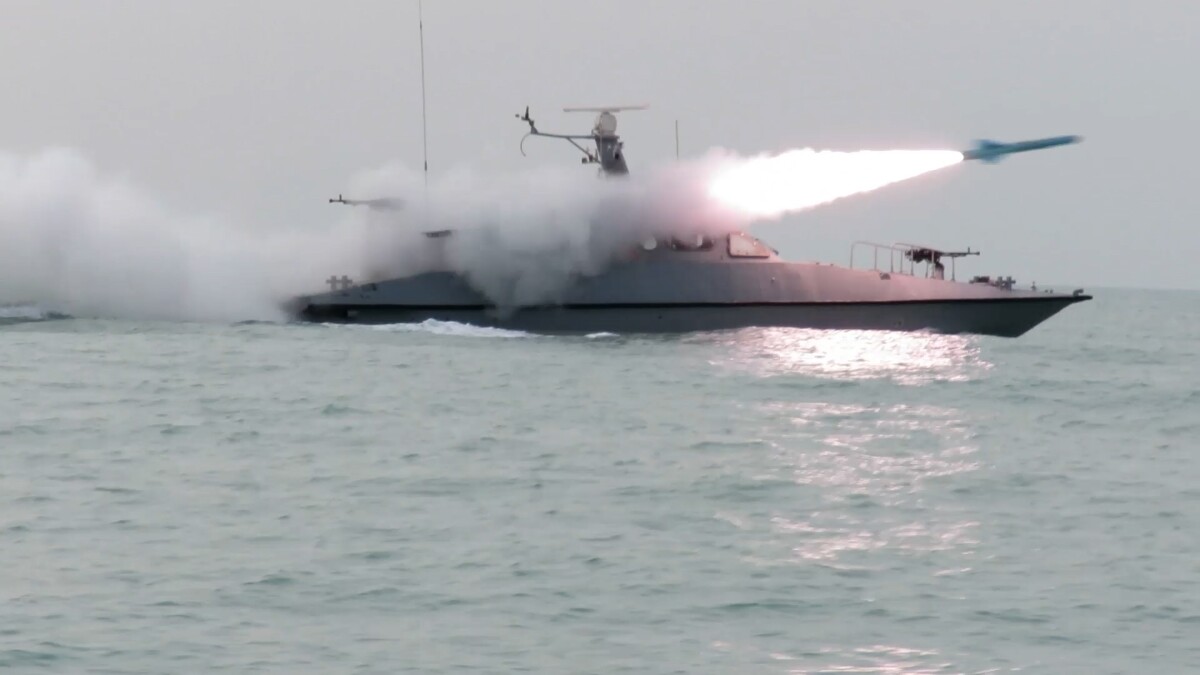
In simple terms, the logic was to “blind the nodes of command, open aerial corridors by degrading defenses, and reduce firing capability — especially from western Iran — against Israel and against U.S. and allied installations in the region.” Following that initial wave, CENTCOM stated that its forces “successfully defended” against hundreds of Iranian missile and drone attacks. The figure they released was formidable: around 500 targets hit, including air defenses and missile launchers attacked simultaneously at multiple points in the country. The Israel Defense Forces (IDF) explained that hitting defenses allowed them to expand air superiority over Iranian airspace and, above all, damage the main offensive capability they attribute to the regime: missile launch bases in western Iran. In the same report, it stated there were no casualties among U.S. military personnel and that damage to U.S. installations was “minimal” and did not affect operations. This definition is not minor: it aims to clarify that this was not a single action but a large-scale operation, with multi-level planning and capabilities deployed across different domains — air, sea, and land — to sustain the pace of attacks while, at the same time, protecting bases and allies from the Iranian response. According to the official explanation, “the first hours” included precision munitions launched from air, land, and sea platforms. The mention of Tabriz was meant to justify the “preventive” nature of part of the operation, in a context where the international debate on proportionality and the risk of escalation is growing by the hour. Prime Minister Benjamin Netanyahu summarized the political definitions within the military picture. The message sought to convey control of the situation: the strike was carried out, the response was contained, and combat capability remains intact. The leadership of CENTCOM, led by Admiral Brad Cooper, reinforced this narrative with a phrase aimed at both the public and regional allies: the president, he said, “ordered a bold action” and U.S. forces — soldiers, sailors, airmen, Marines, guardians, and coastguardsmen — “are answering the call.” According to the official timeline, the first wave began on Saturday at 1:15 a.m. (Eastern Time) — 3:15 in Argentina — with a declared objective: to dismantle the regime's security apparatus, prioritizing targets considered an “imminent” threat. In its communiqué, CENTCOM described the deployment as “the largest regional concentration of U.S. military power in a generation.” In that game, the technical details of the operation's start — time, means used, prioritized targets, and damage balance — are not just information: they are signals. In that context, they pointed to a site attacked in the Tabriz area, which — according to their version — was used by a land-to-missile unit from which dozens of projectiles were planned to be launched towards the Israeli rear. This discursive line aligns with the most ambitious goal already visible in the messages from Washington and Jerusalem: not only to degrade capabilities but to strike at the decision-making core and accelerate an internal breakdown in Tehran. With both fronts — military and political — in motion, the region is entering slippery ground: each side is trying to establish its narrative, sustain its deterrent capability, and at the same time, prepare for the next step. In public statements, it was stated that Israel attacked the location where Ayatollah Ali Khamenei was, and that “several important leaders” of Iran's nuclear program were killed. In the grammar of military communiqués, this declaration functions as political backing for the decision and as a warning of operational continuity. In parallel, from Israel, the Israel Defense Forces (IDF) reported that they carried out “the largest attack in the history of the Israeli Air Force”: around 200 combat aircraft participated in a broad offensive against the missile arsenal and defense systems in western and central Iran. The detail that drew the most attention was another one: CENTCOM's Scorpion Strike Operational Force used low-cost, single-use attack drones in combat for the first time, a resource designed to saturate defenses, expand the range of targets, and maintain operational pressure without depending exclusively on more expensive or complex vectors. The list of targets released by the U.S. command included command and control facilities of the Islamic Revolutionary Guard Corps (IRGC), air defense capabilities, missile and drone launch bases, and military airfields. Washington- March 1, 2026- Total News Agency- TNA– With the Middle East at maximum tension and a new chapter of open escalation, the U.S. Central Command (CENTCOM) released this weekend details about the start of Operation Epic Fury, the offensive ordered by President Donald Trump and executed in coordination with Israel. And in the Middle East, signals are usually the prelude to new rounds.