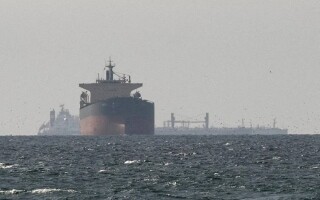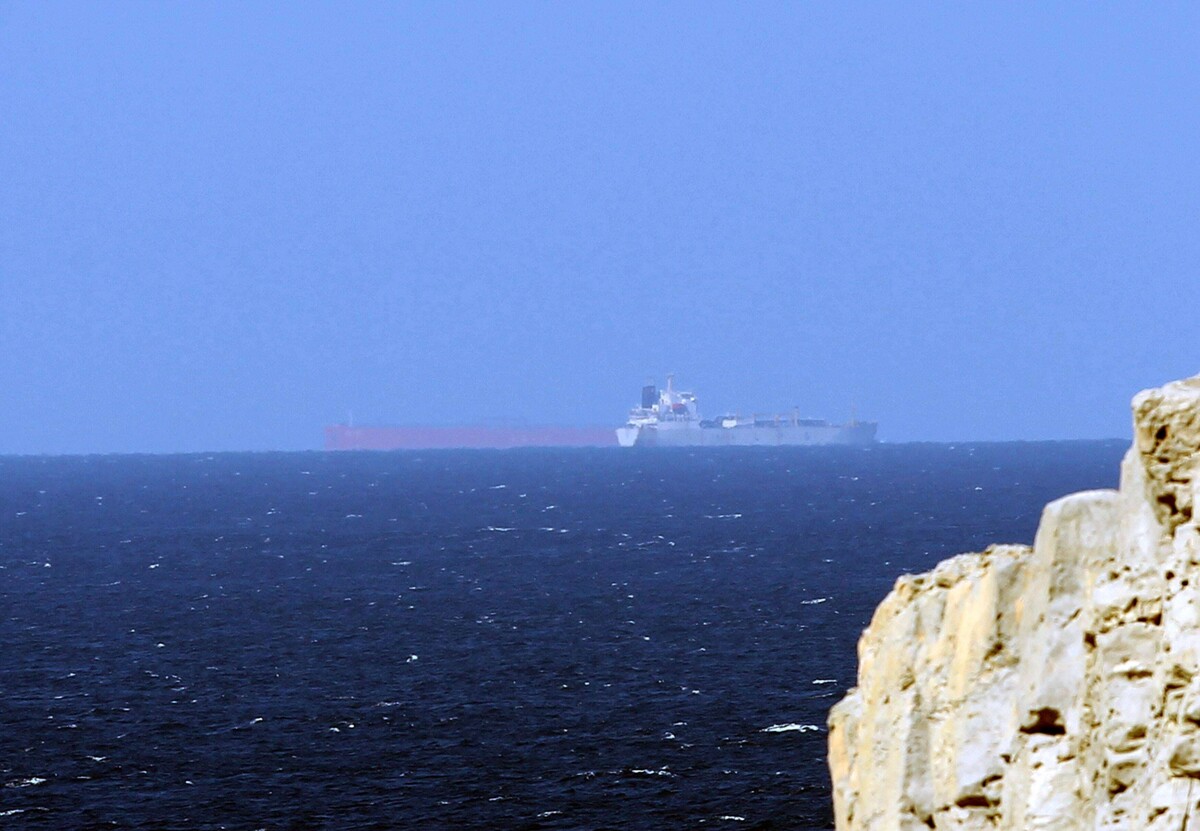
Iran threatened to “annihilate the entire country in a single night” and return it to “the Stone Age.” For China, the situation in the Strait of Hormuz is especially sensitive, as around 45% of the Asian giant's gas and oil imports pass through this route. In recent weeks, the war has driven up crude oil prices, increased energy and logistics costs in China, and forced the country's authorities to intervene temporarily to limit fuel price hikes. After traffic in the str plummeted by as much as 97% with the start of the war, movement through Hormuz began to cautiously resume on Wednesday after the U.S. and Iran agreed to a two-week truce that will allow for the “safe passage” through the waterway. However, on the same day, Tehran announced a halt to tanker navigation in response to the massive surprise bombings Israel launched on Lebanon, information that the White House has denied. Hours before the agreement, Tehran stated that its plan stipulates a “security protocol” to ensure Iranian “control” over this strategic passage, through which nearly 20% of the world's fossil fuels passed before the war. The reopening of Hormuz has been a demand from the international community and, especially, from U.S. President Donald Trump, who has repeatedly threatened Iran with attacks and to “annihilate” its power plants and bridges if it did not reopen the strait. Two fully loaded Chinese tankers are heading from the waters of the Persian Gulf toward the Strait of Hormuz, which could make them the first two vessels of their type to cross the waterway after the two-week ceasefire declared by the U.S. and Iran following more than a month of war. According to the tracking platform MarineTraffic, the vessels 'Cospearl Lake', under the Hong Kong flag and linked to the Chinese state-owned shipping company Cosco, and 'He Rong Hai', under the Chinese flag and owned by another minor operator, were sailing east during the early morning. In both cases, the localization systems show messages declaring Chinese ownership and crew in the field where the destination of navigation should appear, following the example of other ships from that Asian country that have managed to transit Hormuz despite the 'de facto' blockade imposed by Iran. According to Bloomberg, if these two vessels manage to cross the strait on Thursday, they would become the first large non-Iranian tankers to do so since the aforementioned ceasefire was announced, although the outlet notes that in recent weeks there have been multiple cases where vessels turned back at the last minute. Additionally, Cosco has opted for caution for weeks by keeping its tankers 'trapped' inside the Gulf, only allowing some empty cargo ships to leave. The tankers heading toward Hormuz today are transporting Iraqi and Saudi crude, respectively, which, according to the information, raises the question of whether Iran will allow them to leave on equal terms, as Tehran has granted most permits to countries it considers friendly, like Iraq, while in the case of Saudi Arabia, it has been one of the targets of its retaliatory measures for U.S. attacks.