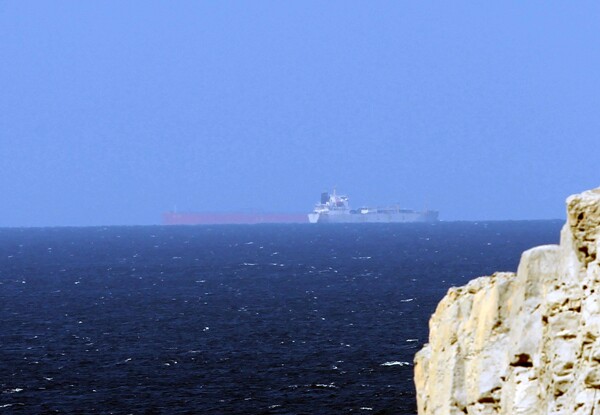
Global shipping and energy flows could take months to return to pre-war levels. A Greek-owned bulk carrier and a vessel flying the Liberian flag passed through the strait on Wednesday, according to ship tracking company Kepler. However, 'there are not yet any clear indicators of widespread repositioning or alignment that would suggest ships are preparing to pass through in large numbers,' said Dimitris Ambatzidis, a first-risk and compliance analyst at Kepler. Shipping companies may be reluctant to negotiate with Iranian authorities, especially if the terms of passage are unclear and require large payments. Iran's foreign minister said in a statement early Wednesday that safe passage through the strait would be possible if coordinated with the Iranian army and subject to 'technical limitations'. Despite the ceasefire announcement between the US and Iran, shipping traffic in the Strait of Hormuz remains far from returning to normal, with extreme caution from shipping and insurance companies, and a lack of full clarity on passage terms and risk levels. Hours after Iran announced the strait was open for passage, it was closed again, according to Iranian media, following Israeli strikes on Lebanon. On Wednesday, there were no signs of a large-scale return of ship traffic through the strait, despite Washington's confirmation and Tehran's claim that they would work to facilitate ship passage under ceasefire agreements. Experts told the New York Times that shipping could increase if operators conclude that passage terms are clear and the risk of attacks has decreased. Analysts pointed out that this was Iran's stance before the ceasefire. Jack Kennedy, head of country risk for the Middle East and North Africa at S&P Global Market Intelligence, said in an email: 'This represents a minor functional shift in Iran's position compared to what it was before the ceasefire, and contradicts US demands for unrestricted global shipping passage through the strait'. Nevertheless, President Trump indicated on Wednesday that the US would play a role in controlling the waterway. A joint project?! Trump posted on social media: 'The United States will help address the traffic congestion in the Strait of Hormuz. He added: 'It seems most operators prefer to wait'. S&P Global Market Intelligence reported 244 tankers to the west of the strait and 156 to the east of the waterway, a count that only includes ships with their tracking devices on. Even if ship traffic increases, the damage and disruption to the region's energy infrastructure during the war mean that stabilizing global fuel supplies remains an expensive and time-consuming project. Iran said it would play a role in regulating traffic through the strait. Big money will be made. There will be many positive actions!