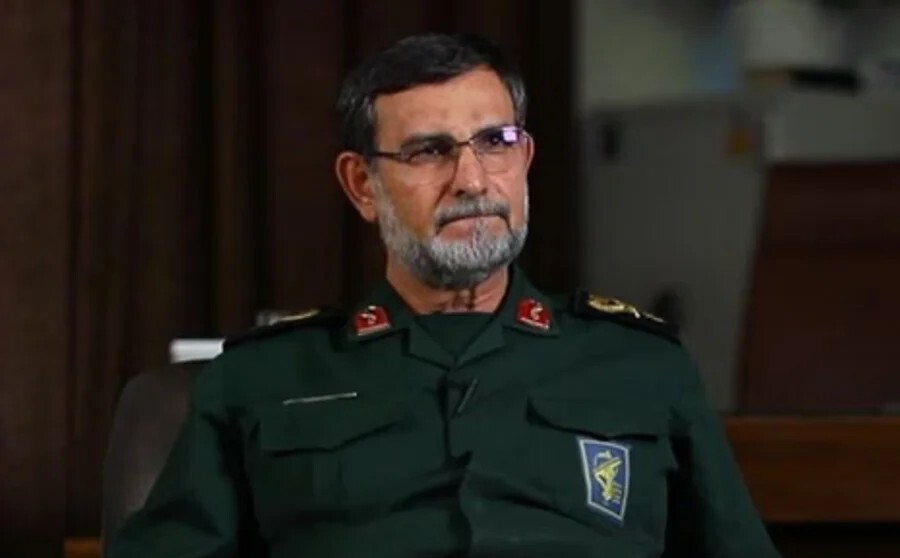
In a scenario where the Strait of Hormuz remains one of the keys to global energy prices, the death of Tangsiri appears to be more than just a military loss: it is an episode with potential consequences for world trade, maritime security, and the balance of power in the Gulf. His death, therefore, not only represents a command loss for the regime, but also a blow to the decision-making chain of one of the few capabilities with which Tehran still retains systemic damage power. The Iranian recognition also shows another signal: the magnitude of the impact suffered by the country's military leadership in recent days has already made it impossible to maintain certain silences. Politically, it exposed a new crack in the narrative of strength that the regime is trying to maintain in the midst of war. Going forward, the unknown is not only about the replacement of Tangsiri, but also about Iran's real ability to maintain its maritime doctrine of deterrence amid the deterioration of its leadership. The data explains why every Iranian threat regarding that passage has an immediate effect on markets, maritime insurance, logistics costs, and international supply. Tangsiri had turned that geographical lever into a political and military tool: turning a strait into a global coercion instrument. His name had appeared for years associated with explicit threats to close the Strait of Hormuz in case of external aggression or greater sanctions against the Islamic Republic. That is the true scope of a news item that, under a tactical appearance, touches a central nerve of the global economy again. For Israel, the elimination of Tangsiri also had an operational and symbolic value: removing from the scene the man identified as one of the main responsible for the blockade of commercial routes and the eventual mining of crucial maritime accesses. For Tehran, the loss is not minor: Tangsiri was one of the most ideologized and operational figures of the Persian military apparatus, with strong influence over the maritime strategy in the Persian Gulf and the Strait of Hormuz. The figure of Tangsiri has a weight much greater than that of a simple naval command. Not coincidentally, Washington had sanctioned him for acting on behalf of the IRGC and for his role in destabilizing actions in strategic waters. The relevance of his fall is better understood when looking at the value of Hormuz. That the own Revolutionary Guard had to admit the loss of such a sensitive commander reflects to what extent the pressure on the naval command structure became undeniable. Strategically, the operation sought to weaken Iran's ability to turn a regional crisis into an international economic shock. The confirmation came through official channels of the country's own military body, which pointed out that the high-ranking commander 'succumbed to serious injuries' after being hit during the offensive that struck the regime's naval and security structure. A veteran of the Iran-Iraq war, he had led the maritime branch of the Revolutionary Guards since 2018 and was identified as one of the architects of the doctrine of pressure on international energy routes. Tehran, March 30, 2026 - Total News Agency - TNA - Iran admitted this Monday the death of Alireza Tangsiri, commander of the navy of the Revolutionary Guard, in a recognition that ended up validating, at least in essence, the announcement made days ago by Israel about his elimination. From the perspective of Israel and the United States, he was also a man directly linked to the intimidation of ships, the deployment of fast boats, the development of cruise missiles, and the use of drones within the Iranian naval structure. The structure of the Revolutionary Guard has continuity mechanisms and prepared cadres to occupy vacant spaces, but the loss of a commander with decades of experience, territorial knowledge, and operational centrality is not replaced without costs. That maritime corridor, between Iran and Oman, continues to be one of the nerve points of the world's energy system. About a fifth of the world's oil consumption passes through it, in addition to enormous volumes of liquefied natural gas, especially from Qatar.