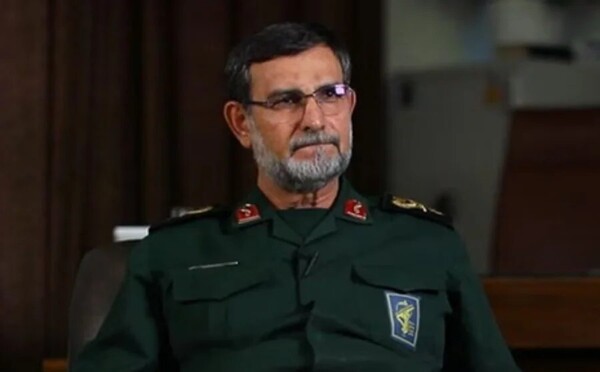
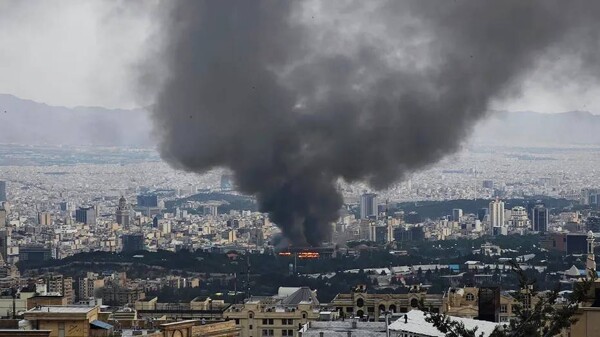
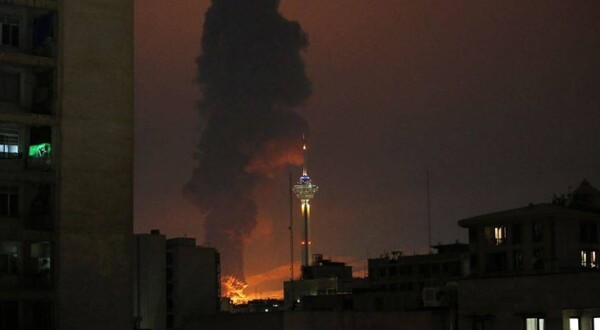
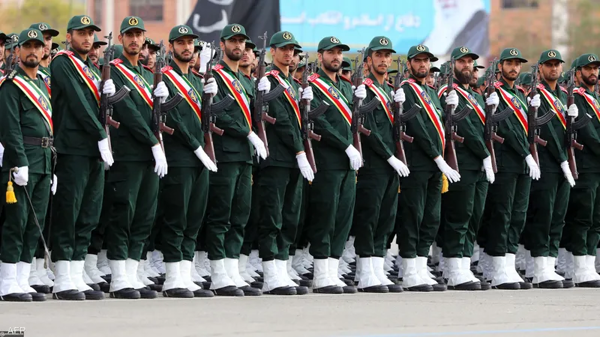
The mere discussion of a potential US ground incursion takes place in an already inflamed regional scenario, where any further step could accelerate a war of an even greater scale. For the Iranian regime, the threat of invasion also serves an internal political function. It serves to rally the ranks, justify new security measures, and present the war as an existential battle against a Western coalition that would seek not only to strike military installations but to break the resistance of the Iranian state on the ground. This combination of military reinforcement and public denial of invasion is precisely the crack the Iranian regime exploits to sustain its accusation of 'double standards'. The regional backdrop makes this hypothesis even more delicate. This fact does not confirm a decided invasion, but it does show that the hypothesis has ceased to be an abstract exercise and has moved into the realm of contingency planning. At this point, the main difference between the Iranian narrative and the verified information to date is established. The Iranian regime raised the tone of its strategic warning on Sunday by assuring that the United States would be preparing a ground offensive, in a new verbal escalation that combines war propaganda, diplomatic pressure, and deterrent signals toward Washington. The statement, disseminated by Iranian state media and replicated by international agencies, was not accompanied by public proof, but it acquires relevance because it coincides with Western reports indicating that the Pentagon would be studying plans for limited ground operations in Iranian territory. The statement by Qalibaf, however, must be read with a double key. According to his words, the goal remains to degrade the missile, naval, and air capabilities of the Iranian regime without opening an occupation front that could turn the conflict into a much more costly, extensive, and unpredictable war. The phrase points less to describing an imminent maneuver than to reinstating the principle of deterrence, at a time when the air superiority of the United States and Israel has severely punished Iran's military infrastructure. The conclusion, for now, obliges moving with caution. This gray zone is where the war moves today: between the maximalist rhetoric of Tehran, the Pentagon's preventive military planning, and regional diplomacy trying to prevent a leap that could completely change the scale of the conflict. It is a decisive distinction: Tehran speaks of a ground offensive as if the decision were made, while on the American side, what is publicly known is the existence of possible military plans, not a final political order to execute them. At the same time, the American administration itself has been sending contradictory messages. The accusation was formulated by the president of the Iranian Parliament, Mohammad Bagher Qalibaf, who maintained that the enemy speaks publicly of negotiation while, in secret, it would be preparing a land incursion. The mere existence of this discussion already reveals to what extent the crisis has entered a more dangerous phase. On the one hand, it is part of the classic discourse of resistance of Iranian power, which tries to show internal firmness and present the United States as an actor that negotiates in bad faith. At the same time, the war continued to expand: the AP agency reported that there are already more than 3,000 dead in the conflict in Iran, Israel, Lebanon, Iraq, and Gulf countries, while the Houthi rebels from Yemen fully entered the confrontation with attacks on Israeli targets. What appears on the table, according to available reports, would not necessarily be a large-scale invasion in the style of classic campaigns in the Middle East, but rather the evaluation of limited incursions, raids, or the targeted capture of strategic objectives, especially in coastal areas linked to energy and maritime control. From this approach, Qalibaf toughened the message by stating that US troops would be 'incinerated' if they set foot on Iranian soil. While deployments grow in the region, with the arrival of a first contingent of Marines and plans to reinforce the theater with thousands of soldiers from the 82nd Airborne Division, the Secretary of State, Marco Rubio, declared that the United States can achieve its objectives in Iran without the need for ground troops. What Iran stated is not fully proven as a consummated decision, but it cannot be dismissed as mere propagandistic fantasy. On the other hand, it does not arise in a vacuum. Reuters reported that, according to a Washington Post report based on US officials, the Pentagon is preparing scenarios for several weeks of ground operations that could include special forces raids and conventional infantry, although eventual approval from President Donald Trump would remain uncertain. There is no public evidence that Trump has ordered a ground offensive, but it cannot be ruled out that Washington may keep ready plans for pinpoint strikes if it understands that the air campaign is not enough to break Iran or secure sensitive points such as the area around the Strait of Hormuz. In Islamabad, the foreign ministers of Saudi Arabia, Turkey, and Egypt participated in talks promoted by Pakistan to try to find a diplomatic way out, although without the presence of the United States or Israel.

Iran Accuses US of Preparing Ground Invasion
The Iranian regime claims the US is preparing a ground offensive, while the Pentagon studies limited operation plans. The war in the region continues to expand, and diplomacy seeks a way out.