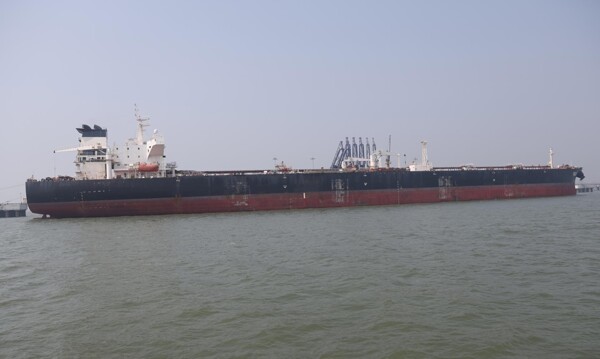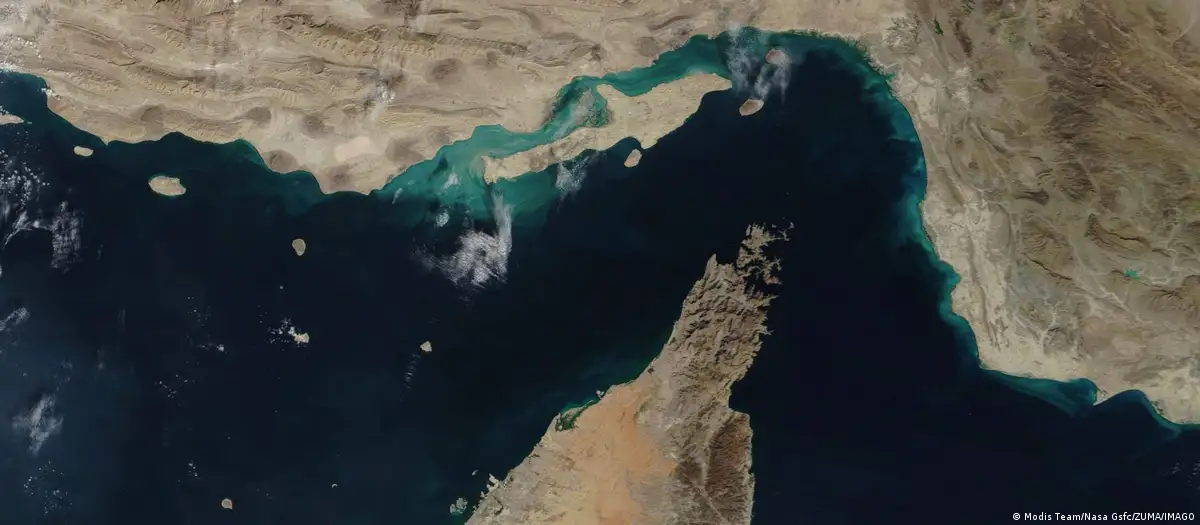
If Tehran insists on maintaining the blockade, the showdown will no longer be just diplomatic: it will also involve sanctions, coordinated pressure, and a redesign of international maritime security in one of the planet's hottest arteries. According to the British statement released after the meeting, participating countries agreed to increase diplomatic pressure and study coordinated economic and political measures, including sanctions, if the passage remains closed. The harshness of the statement was not accidental. In parallel, Reuters reported that the next stage will be a meeting of military planners next week to analyze options such as possible demining tasks and a “reassurance” force for commercial traffic. The geopolitical landscape also shows a significant novelty: the United States did not participate in the meeting after Donald Trump publicly demanded that other countries, especially those most dependent on that route, assume the task of guaranteeing its reopening. Morgan warned that oil could climb above $150 if the disruption continues until mid-May, a sign of the level of nervousness that dominates today among operators. At this point, the blockade has ceased to be a regional problem and has become a factor of instability for households, companies, and markets worldwide. From London, Cooper accused Iran of trying to take the global economy hostage and emphasized that freedom of navigation and respect for the law of the sea cannot be subject to the military or political calculations of the Islamic Republic. The meeting, led by British Foreign Secretary Yvette Cooper, sent a very clear political message: the major economies affected by the disruption of oil transit are no longer willing to tolerate Tehran using that strategic route as an instrument of global coercion. The virtual paralysis of Ormuz, adopted as retaliation after the military escalation that began on February 28, has already altered the global energy flow and forced producers, markets, and governments to recalculate scenarios. Normally, about one-fifth of the world's oil consumption passes through Ormuz, so any disruption in that corridor immediately affects prices, freight, insurance, inflation, and energy supply. This position pushed Europe, Asian partners, and Gulf countries to accelerate their own response, although without full consensus on the use of force. This impact is already being felt strongly: during the day, Brent rose 7.2% to $108.48 a barrel and WTI advanced 11.6% to $111.73, amid the growing perception that the conflict could spread and the reopening of the strait will not be immediate. This difference of criteria shows that the international community shares the diagnosis of the seriousness of the problem, but still does not have a single recipe to solve it. Meanwhile, Iran continues to play with fire. In this context, the summit promoted by the United Kingdom sought to draw a red line: the world can discuss how, but it has already decided that it will not accept the strait remaining closed indefinitely. The official British statement also specified that the countries discussed four lines of action: increase diplomatic pressure, even within the UN; explore sanctions and other punitive measures if the closure persists; coordinate with the International Maritime Organization to free thousands of ships and crews trapped; and generate joint mechanisms that return predictability to the maritime and energy market. In fact, French President Emmanuel Macron stated this Thursday that a military reopening of the strait would be “unrealistic” due to the risk of exposing ships to the threat from the Islamic Revolutionary Guard Corps and missile attacks. London, April 2, 2026 - Total News Agency - TNA - The crisis in the Strait of Hormuz entered a new phase of international pressure this Thursday after nearly 40 countries met in a virtual summit convened by the United Kingdom to demand Iran's “immediate and unconditional” reopening of one of the planet's most sensitive maritime passages.