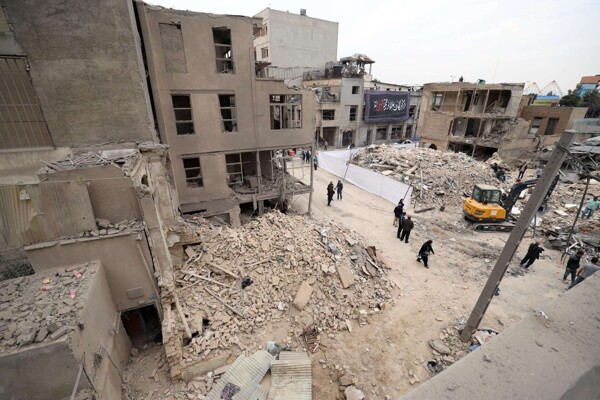
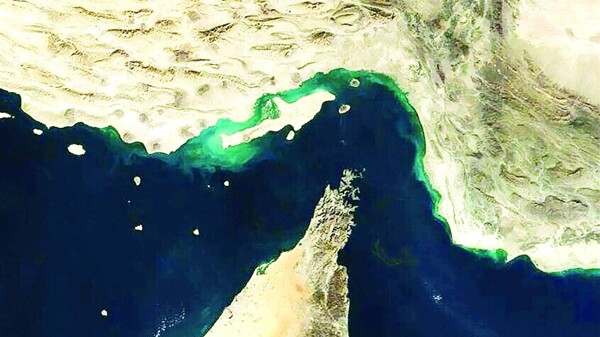
A high-ranking Iranian official close to the security apparatus stated that if the Emiratis allow it, Iran would respond with a severe attack against the wealthy Gulf state. The official also added that if the United States takes control of the island, Iran will not hesitate to bombard it, even if it entails enormous economic losses for the regime, and will place mines in the strait and in the Persian Gulf itself. «After this war, it is up to the Iranians to decide how they will rebuild trust,» stated Al-Ansari. According to the source, if Trump fulfills his threats to seize the island of Kharg—through which 90% of Iranian crude oil is exported—this would provoke an even greater reaction from Tehran throughout the region. Iran's main Arab neighbors in the Persian Gulf are considering joining the war between the United States and Israel against Iran, and they could be forced to do so if Tehran attacks their critical infrastructure, according to several people with knowledge of the situation. The most powerful states in the Gulf, particularly Saudi Arabia and the United Arab Emirates, are losing patience with Iranian attacks that have already reached ports, energy facilities, and airports, these sources said, requesting anonymity to speak freely. They could also end up in a situation where U.S. President Donald Trump reaches a deal with Tehran, and have to deal with a wounded and enraged regime, added a European diplomat in the region. Many governments fear this could happen even if they do not join the war, according to the population. The war has disrupted Iran's relations with its Sunni Arab neighbors. Saudi Arabia and the United Arab Emirates have spent most of the last five years trying to stabilize their ties with the Islamic Republic—a theocratic Shia regime they have long seen as an attempt to extend its ideology and influence to the rest of the region—largely to prevent the type of conflict now ravaging the region. In the last 24 hours, Bahrain, Kuwait, Saudi Arabia, and the United Arab Emirates intercepted drones and missiles fired by Iran. Iran claims that the Gulf states are legitimate targets because the United States uses their airspace and territories to attack it, a claim that all reject. Spokespersons for the foreign ministries of Saudi Arabia, the United Arab Emirates, Bahrain, and Kuwait did not immediately respond to requests for comment. Majed Al-Ansari, a spokesperson for the Qatari Ministry of Foreign Affairs, stated at a press conference on Tuesday that the Gulf states will have to find ways to coexist with Iran. Nonetheless, they are cautious about joining the war, given that Iran could intensify its attacks against them. There was no immediate response to a request for comment sent to the Iranian government via its embassy in the United Kingdom. The official requested anonymity to discuss internal deliberations. The U.S. troops needed for the mission would likely be sent from the United Arab Emirates, where Al Dhafra Air Base is located, explained the Iranian official, highlighting Tehran's stance on such a move. However, they would only join the war if Tehran carries out its threats to attack vital energy and water infrastructure in the Gulf, a very high threshold, the sources added. Most of the Gulf states are heading in that direction, with some exceptions like Oman, which wants to maintain its mediator role, the sources said. The Islamic Republic, a country of 90 million people, is located right across the Persian Gulf.

Iran Threatens Response to Potential Arab States' War Participation
A high-ranking Iranian official has stated a readiness to respond with a severe attack if Persian Gulf Arab states join a war against Iran. He also mentioned the possibility of bombardments and mining the strait in case the U.S. seizes Kharg Island. Major Gulf states, including Saudi Arabia and the UAE, are losing patience with Iranian attacks but remain cautious about directly joining the conflict.