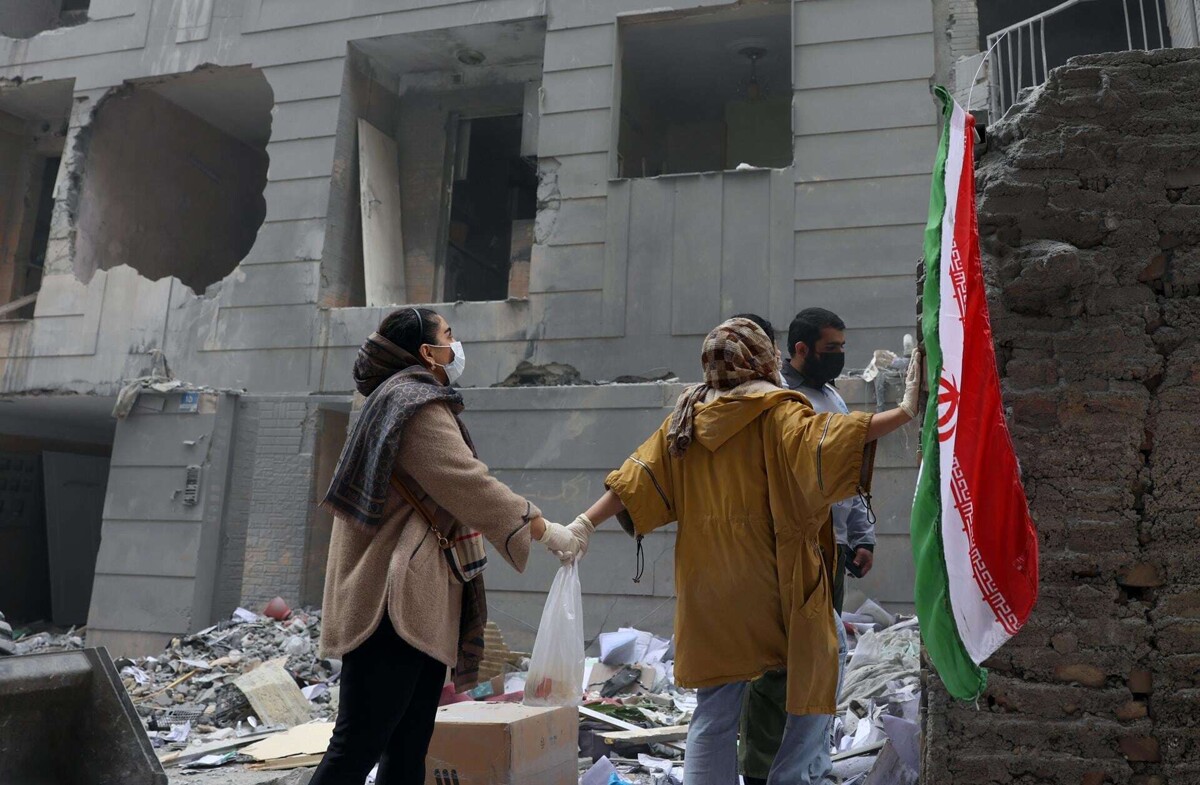
This preliminary analysis does not aim to establish an endpoint to the current war in Iran, as it ignores many key data points, but it allows for measuring the involved tensions to gain intelligence on the factors that enable a variety of outcome scenarios.
Now, at the dawn of the 21st century, a new version of this character emerges. Disregarding common interests, this figure uses the power obtained from their country's internal government to create situations of instability in the world order. The goal is to increase their dominance externally through intimidating measures (tariffs and trade embargoes) and actions that violate international law (kidnappings, assassinations, threats of invasion, among others).
Based on this description of one of the actors in the current conflict in Iran, it is interesting to analyze how this character interacts within the current historical context. Drawing on ideas inspired by Isaac Asimov's psychohistory and applying game theory, we can find clues to understand the strategic moves of participants in various fields, from a chess game to a novel or a war.
Historically, the first human civilizations made contact and developed ties over land, fostering commercial connections in Eurasia such as the famous Silk Road. The maritime route gained prominence with European influence.
From this game of possibilities, any action by the 'Leviathan 2.0' that seeks to distance Europe from eastern partners like Russia (either through the war in Ukraine or through the sabotage of Nord Stream 2, which transported Russian gas to Germany via Germany), or that maintains political instability in the Middle East or the Iran region as key land bridges for the advance of the OBOR initiative, makes sense.
The question that remains open is: will the 'Leviathan 2.0' prevail in this game of wars or will it ultimately be consumed by its own internal contradictions?
"The first victim of a war is the truth," said historian Denis Hermann, specializing in the 19th and 20th century history of Iran, in an interview with Radio France International, recalling a thought from Sir Winston Churchill.