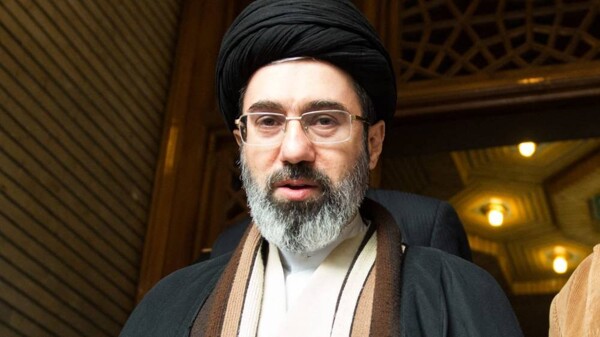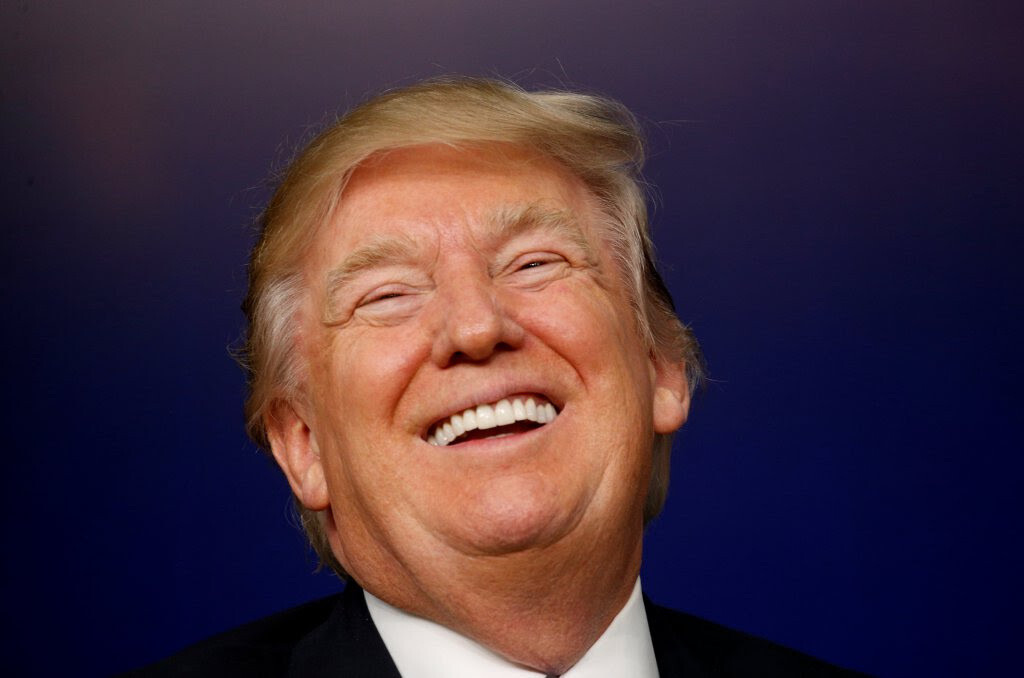
If the new leader appears injured, questioned, isolated and subjected to devastating rumors, the Iranian succession crisis could enter an even more delicate phase. A CBS News report indicated that U.S. intelligence had detected strong objections from the late Ali Khamenei to the possibility of his son inheriting command, whom he would have considered unqualified and affected by problems in his personal life. Washington, March 16, 2026 - Total News Agency - TNA - A journalistic report released in the United States in recent hours introduced an element as delicate as politically explosive amid the crisis with Iran: according to that version, President Donald Trump was informed by U.S. intelligence that the new Iranian Supreme Leader, Mojtaba Khamenei, could be homosexual, a situation that, if true, would acquire an extraordinary dimension within a theocratic system that criminalizes such conduct and built much of its internal legitimacy on a rigid religious morality. The revelation was published by the New York Post, which attributed the information to sources in the intelligence community and the White House's inner circle. This political and personal fragility helps explain why any leak about his privacy can become a high-voltage weapon inside and outside Tehran. The background makes the crisis even more severe. In scenarios of war, succession, and psychological operations, intelligence services, governments, and propaganda apparatuses often combine facts, partial versions, and interested leaks with the aim of weakening the adversary, eroding its authority, or conditioning its margin of maneuver. What is backed by other journalistic reports is that the figure of the new Iranian leader came to power surrounded by doubts, tensions, and questions even within the Persian system itself. The article states that the alleged information was not treated by analysts as mere propaganda, but as a considered credible data within certain intelligence circuits. However, beyond the political and media impact of the report, there is still no independent public confirmation that allows conclusively validating that accusation about the private life of Mojtaba Khamenei. According to that medium, Trump reacted with surprise and even laughter during the briefing in which he would have been presented with that sensitive data about the man who replaced his father, the late Ali Khamenei, at the head of the Islamic Republic. In fact, Trump himself declared this Monday that it was unclear if the new Iranian leader was still alive, while other U.S. officials spoke of severe injuries and even possible disfigurement. That is why a version like this could not only damage the image of the new Supreme Leader internally but also expose a devastating contradiction at the top of the regime: that the one who embodies the maximum power of a theocracy that punishes such conduct is precisely reached by a suspicion of that nature. In geopolitical terms, the episode adds another destabilizing component to a power structure that was already being hit by the war, losses in its leadership, and the combined military pressure of the United States and Israel. The discussion no longer passes only by Iran's ability to sustain its nuclear and missile programs or by the closure of the Strait of Hormuz, but also by the real strength of the figure that intends to lead the continuity of the regime. In Iran, same-sex relationships are illegal, and the state apparatus has maintained for years a policy of persecution, punishment, and repression against sexual minorities. That coverage did not confirm the accusation later spread by the New York Post, but it did show that in Washington, reports were circulating describing Mojtaba as a vulnerable leader, disputed and with difficulties in consolidating authority. In parallel, Reuters confirmed in recent days that Mojtaba Khamenei was appointed as the new Supreme Leader of Iran and that his physical situation remains shrouded in uncertainty after the attacks that struck the regime's leadership.