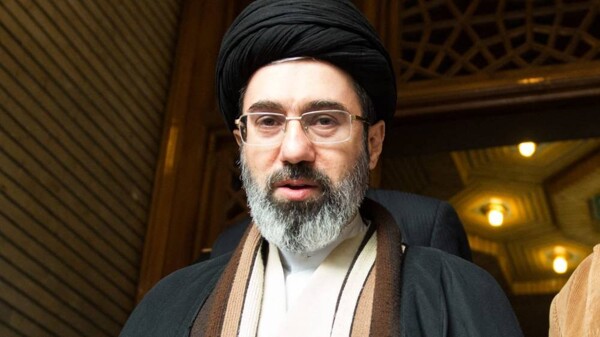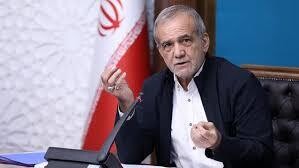
For more than four decades, the Iranian system managed to survive sanctions, protests, selective assassinations, regional conflicts, and internal disputes, supported by a complex power network that combines religious leadership, a military apparatus, political bodies, and its own economic structures. The conclusion, for now, is less spectacular than the climate of war: Israel does detect fissures, but it does not take the regime's collapse for granted. The absence of mass protests during the war, fear of repression, and the growth of nationalist reflexes in the face of external attack today appear as concrete brakes on any scenario of rapid implosion. This is added to by another relevant fact: US intelligence itself considers that the Iranian regime is not, for now, at risk of collapse. In private conversations, Israeli officials acknowledged that there is no certainty that the war will lead to the collapse of the Iranian theocratic government. However, the fall of the system is not seen today as a foregone conclusion, but as an open, uncertain possibility conditioned by the evolution of the war, internal social reaction, and the Iranian apparatus's ability to continue closing ranks against external pressure. That combination—a questioned, wounded leadership backed by a military apparatus that is gaining weight—does not speak of consolidated stability, but neither of immediate collapse. In parallel, the war continues to increase pressure on the economy and daily life in Iran. In that context, the discussion over the succession in the religious and political leadership of Iran also accelerated, in a scenario where the pressure of bombings and the elimination of high commands forced greater intervention by the Revolutionary Guard in strategic decision-making. However, Israeli authorities themselves admit that these fissures do not automatically equate to an immediate regime fall. At the same time, Iranian sources cited by Reuters pointed out that his rise was pushed by the Revolutionary Guard, which sees him as a more manageable figure and more aligned with a hard line in both foreign policy and internal control. A high-ranking Israeli official stated that signs of weakening and internal tensions are beginning to appear within the Iranian regime, amid the joint military offensive by Israel and the United States and following the death of Supreme Leader Ali Khamenei, it was learned from the Total News Agency. According to the assessment conveyed by Israeli sources, contradictions, lack of coordination, and friction are observed in Tehran's power structure between hard-line and more pragmatic currents, a picture that for Jerusalem suggests the existence of cracks within the political system that has governed Iran since the 1979 Islamic Revolution. Israel's perception did not arise from a vacuum. But later the Israeli government itself moderated that expectation and let it be known that an eventual regime collapse could be delayed for months or even years, if it occurs at all. A high-ranking Israeli official stated that the new supreme leader would have been injured in the attacks and that this would be one of the reasons why he has not reappeared publicly. After Khamenei's death, internal divisions began to be more exposed, with clashes between hard-line factions and more moderate figures in the state apparatus, especially after the controversy generated by President Masoud Pezeshki's promises not to attack the Gulf states. In fact, Israel's assessment is more cautious than its initial public discourse: although the offensive sought to weaken Iran's military and repressive capacity, there are as yet no signs of a large-scale internal uprising or a terminal disintegration of the system. That nuance is key because it exposes the difference between military pressure and the real capacity to produce a regime change. But even in this scenario, analysts and opponents of the regime warn that the history of the Islamic Republic shows a not inconsiderable capacity for resilience. According to sources cited by Reuters, US intelligence reports indicate that Iranian leadership remains largely intact, maintains internal control, and retains command capacity despite the blows suffered. The continuation of attacks, the impact on critical infrastructure, and the interruption of energy flow in the Strait of Hormez aggravate a picture that was already marked by sanctions, economic wear, and social discontent. Tensions in Tehran seem real and could worsen as the conflict progresses, especially if disputes between clerics, the military, and political sectors deepen. According to information known in recent days, Benjamin Netanyahu had suggested at the start of the campaign that the offensive could create conditions for the Iranian people to 'take their destiny into their own hands'. These reports also emphasize that after Khamenei's death, power was sustained by an interim leadership with strong weight from the Revolutionary Guard, and that the designation of Mojtaba Khamenei as the new supreme leader did not substantially alter that control capacity. Precisely the situation of Mojtaba Khamenei appears as one of the factors feeding speculation about fragility and internal dispute. In the Middle East, where more than once wear and tear was confused with collapse, that difference is not minor.