The Lebanese army, tired of a Tehran-funded militia dragging the country to destruction, joined the hunt. The nationalist glue dried up overnight. Spain, despite initial resistance, ended up actively participating. This military siege closed the last diplomatic window Tehran had.
The Giant That Devours Itself: The Triple Pinch What really has Iran on the brink of absolute collapse is the implosion of its own ethnic mosaic. The deafening noise of the bombings is just a smokescreen for the collapse of an obsolete system; the silence, meanwhile, is the freedom that begins to seep in, silent and lethal, through the cracks in a fist that no longer has the strength, faith, or money to keep squeezing.
Its only objective was to sow absolute panic in the global markets, suffocate the supply chain, force the oil barrel to $200, and make the entire world, terrified of an imminent recession, beg the coalition on its knees to stop the fire.
- The Kurdish Front: In the west, the stealth of the Mossad and the CIA has armed militias like the PDKI and Komala to the teeth. Today, those puppets have been left orphaned and under fire. The most dramatic case is that of Lebanon. But when Iran threatened Turkish airspace and paralyzed 90% of commercial transit in Ormuz, the Europeans ran out of patience. And a mercenary who doesn't get paid doesn't immolate himself.
Conclusion The Tehran regime tried to set the neighborhood on fire to hide that its own house was falling apart. In an unprecedented act of national survival, the Lebanese government declared them illegal and banned their actions, in a sovereign and irreversible protocol that amounts to a civil war. But in the era of total intelligence, the fire no longer blinds anyone.
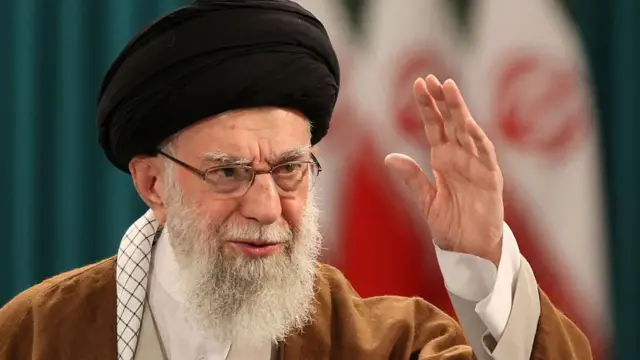
It is the logistics of chaos: cheap, fast, and willing to sacrifice. However, this cavalry of the liquid desert has run into an invisible wall. It is the same stealth that, through paid informants within the Revolutionary Guard itself, guided the bunker-busting bombs exactly to the room where the Supreme Leader Ali Khamenei and 40 of his generals met their end.
There was a barbaric political tug-of-war, with Spain being the most emblematic case: Madrid dragged its feet, resisting involvement. Today, facing the abyss, the soldiers of the regular army show no intention of immolating themselves for a group of clerics who marginalized them for decades.
And within the Revolutionary Guard itself, those barefoot acolytes of 1979 who sought martyrdom with a Quran in one hand and a rifle in the other have disappeared.
- The Azerbaijani Front: With more than 15 million citizens of Azerbaijani origin within its borders, the clumsy bombing of Baku, the capital of Azerbaijan, has awakened an internal lion. But the market, backed by the Saudi promise to open the oil tap, called their bluff.
The European Fury and the Spanish Force In this burning chessboard, we cannot leave the Old Continent out.
The world watches in astonishment at the columns of smoke rising over the rubble of Beit Rahbari in Tehran and the glow of ballistic missiles over the waters of the Persian Gulf. The headlines, thirsty for clicks, scream 'World War III', but there is one actor that maintains surgical coolness: the market.
While the common public fears escalation and is startled by the flames of the Sonangol Namibe tanker burning in Kuwait, investors seem to have understood an uncomfortable truth for the Iranian regime: the noise of the many explosions does not allow us to see the work of intelligence.
That stealth is what managed to make 80% of Iranian missiles fail on their launch pads, victims of a 'Stuxnet 2.0' infiltrated months ago into their chips by the Mossad.
Without the flow of arms and dollars from Iran, Hezbollah and the rest of the proxies have gone from being the ayatollahs' attack dogs to being isolated scraps on a board they no longer control.
Against the Shield and the Sword: The Financial Chaos Strategy Many analysts wonder if Iran's sudden wave of attacks on its neighbors was simply the glaring error of a decapitated regime.
Today, the leadership is a grotesque: an emergency triumvirate and a new Supreme Leader, Mojtaba Khamenei, hastily elected by a terrified Assembly of Experts in the tunnels of Qom. But the reality behind these attacks is a much darker financial tactic.
Iran knew from day one that a conventional military war was lost.
- The Baloch Front: In the southeast, the Sunni insurgency of groups like Jaish al-Adl is taking advantage of the distraction to bleed the Revolutionary Guard.
The Army and the Guard: From the Quran to the Machine Gun To understand the military collapse, one must look at the deep rift between Iran's two armed forces. On one side, the regular army (Artesh). On the other, the Revolutionary Guard (IRGC).
While the IRGC transformed into a corporation that owns customs, ports, and offshore accounts, the Artesh was systematically defunded.
Under the promise of an 'air umbrella', the Kurds are opening a ground front. Operation Epic Fury deploys swarms of LUCAS drones to crash into the boats before they get close.
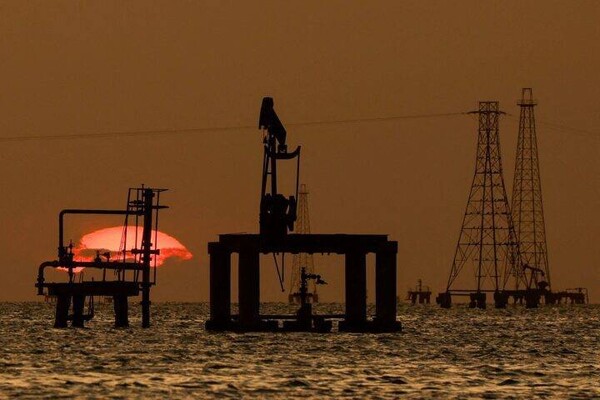
The real blow was the indiscriminate attack on the infrastructure of its Arab neighbors: boats and drones hitting ports in Kuwait, and threatening the production of the United Arab Emirates and Saudi Arabia.
Donald Trump's prediction that this conflict has only a few weeks left is a cold actuarial calculation: without oil to sell, it will take the generals no more than thirty days to realize there are no funds to pay for loyalty.
Israel does not respond by firing two-million-dollar missiles at contraband boats. They respond with algorithms and photons.
The Orphanage of the Proxies and the Jackpot in Lebanon If the internal scenario is bleak for Tehran, the collapse of its 'armed branches' abroad is absolute.
Hezbollah, the crown jewel of the Iranian regime, is being dismantled piece by piece. Without heavy ships, Tehran resorted to its 'light cavalry': the fast boats of the Revolutionary Guard (IRGC).
We are not talking about common boats. The Seraj-1 class is a pirated copy of the Bladerunner 51, a British racing boat capable of flying over the water at over 130 km/h. Hidden under camouflage networks in the coastal caves of Qeshm, they come out in swarms of fifty to saturate enemy radars, firing small Kowsar missiles in mid-wave.
What survives is incinerated in seconds by AI-guided laser weapons or swept by Phalanx Gatling cannons.
The 'Mongol Cavalry' Against the Great Wall of Sicily Iran has dusted off an asymmetric tactic reminiscent of Genghis Khan's fast riders, but in a naval and suicidal version.
Its regular navy became obsolete the day an American submarine sank its most modern frigate, the IRIS Dena, with a Mark-48 torpedo near Sri Lanka.
The market did not panic because the 'mathematics of attrition' favors silicon technology.
Seeing itself between the sword and the wall, they opted for a deliberate geopolitical sacrifice, aiming for the planet's energy jugular. grazing a missile with NATO airspace in Turkey or bombing a civilian airport in Nakhchivan, Azerbaijan, is only part of the equation.
For decades, Iran financed a network of militias (proxies) to harass Israel and the US.
And Israel not only decapitated its leadership with surgical bombings in the suburbs of Beirut, but the real blow came from within.
Their loyalty is no longer ensured by verses, but by the flow of the wallet.
Israel decapitated their leadership with surgical bombings in the suburbs of Beirut, but the real blow came from within. It is the same stealth that, through paid informants within the Revolutionary Guard itself, guided the bunker-busting bombs exactly to the room where the Supreme Leader Ali Khamenei and 40 of his generals met their end.
This was not a targeting failure; it was the 'strategy of chaos'. It is the suicidal logic of: 'if I sink, I drag everyone's economy with me'.
The market did not panic because the 'mathematics of attrition' favors silicon technology.
Without the flow of arms and dollars from Iran, Hezbollah and the rest of the proxies have gone from being the ayatollahs' attack dogs to being isolated scraps on a board they no longer control.
This was not a targeting failure; it was the 'strategy of chaos'. It is the suicidal logic of: 'if I sink, I drag everyone's economy with me'.