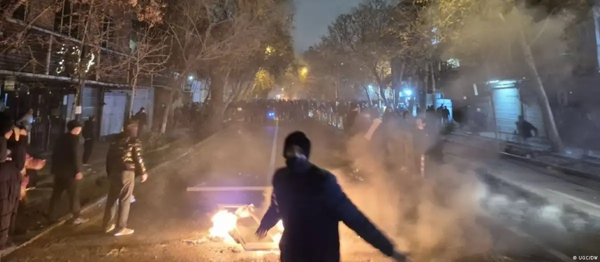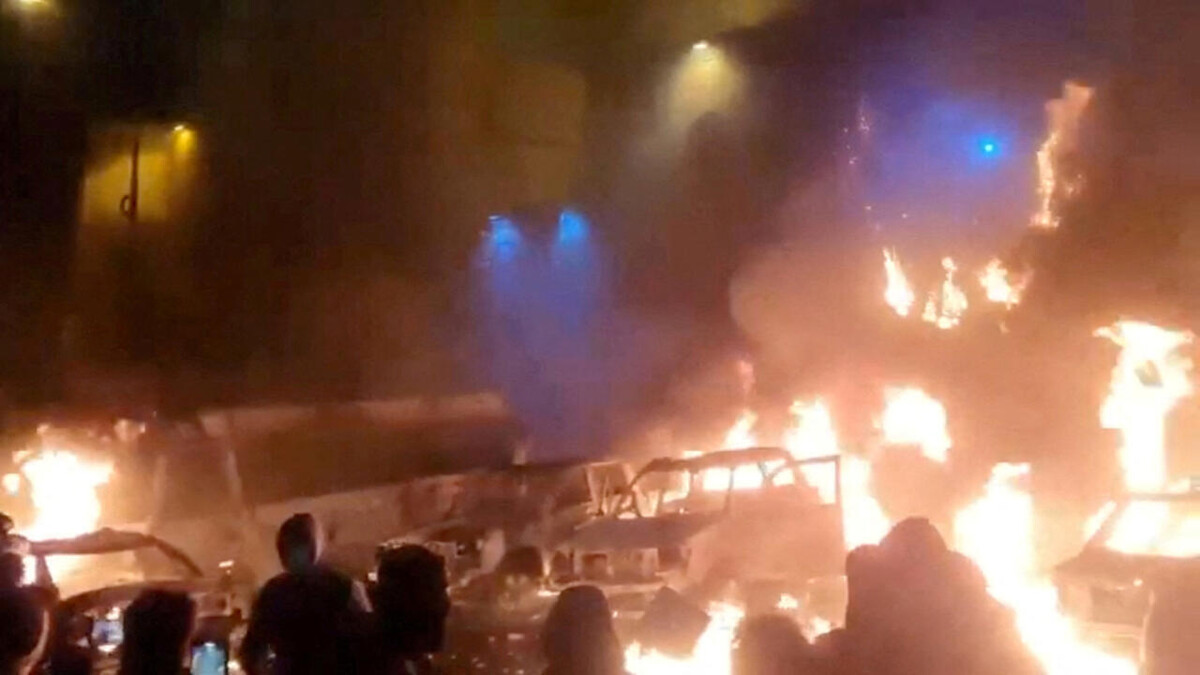
Buenos Aires, January 25, 2026 – Total News Agency-TNA – The repression unleashed by the Iranian regime during the protests of January 8 and 9 could have left up to 30,000 dead in just 48 hours, according to revelations from the magazine TIME based on testimonies from high-ranking officials of the Iranian Ministry of Health and an independent compilation of hospital data. According to researchers cited by TIME, only transparent access to hospital, civil, and burial records would allow for knowing the true magnitude of what happened. For regional analysts and foreign officials, the night of January 8 is already considered the deadliest in the history of the Islamic Republic and one of the bloodiest in the world in a generation. Public health specialists consulted by TIME urged caution regarding the extrapolation of hospital records, but agreed that internal figures point to a massacre concentrated in an exceptionally short period. The regime's reaction was not long in coming. Iran International, for its part, estimated that since the start of the protests, the total number of Iranians killed by the regime could reach 36,500, based on new documentation and testimonies from medical personnel, victims' families, and direct witnesses. Coinciding reports suggest that the regime also began executing detainees in various regions of the country. An Iranian human rights organization based in the United States confirmed at least 5,459 verified deaths and assured that it is investigating more than 17,000 additional cases. Medical personnel confirmed that lethal shots were fired at wounded individuals in custody. TIME underscored the key role of the internet blackout imposed by the Iranian government, which complicated the verification of the actual number of victims for days. The picture that emerges is one of a planned repression and a scale almost unimaginable, which once again places Iran at the center of global complaints for massive crimes against its own population. The new revelations multiply that number and reinforce suspicions that the regime applied a systematic and coordinated repression to crush the protests. Health officials cited anonymously described a scenario of absolute collapse. According to the report, security forces used snipers positioned on rooftops and trucks equipped with heavy machine guns, once the authorities ordered the near-total cut in communications. During those days, a high-ranking official of the Islamic Revolutionary Guard Corps even warned on state television that anyone who went out into the street should not complain if they were shot, a phrase today cited as proof of the political endorsement of extreme violence. The hospital count was compiled by the German-Iranian ophthalmologist Amir-Mobarez Parasta, who assured that the data comes from civilian medical centers and reflects “a much closer approximation to reality”. The spokesperson for the Ministry of Foreign Affairs, Esmaeil Baqaei, rejected the estimates and qualified them as “truly perverse lies,” accusing international media of fabricating figures to harm the Islamic Republic. While officials aligned with the supreme leadership spoke days ago of a little over 3,000 fatal victims, the hospital records analyzed by TIME would account for 30,304 deaths until Friday, January 9. The United Nations Human Rights Council expanded an independent investigation into the alleged abuses, while specialized academics warned that even 30,000 deaths could represent an underestimation. In a public message, he compared the accusations to a “big lie in the style of Hitler,” denying any State responsibility for the figures disseminated. However, different international organizations and media outlets reinforced the complaints. The magnitude of the slaughter would have overwhelmed the corpse-handling capacity, exhausting the reserves of body bags and forcing the use of large trucks and trailers to transport bodies. Images disseminated from local morgues show that several victims were finished off with shots to the head even after being admitted alive to hospitals. The near-total interruption of internet prevented families from being able to confirm the fate of their loved ones, while images of corpses began to slowly filter through clandestine satellite connections. Experts consulted pointed out that if the figures are correct, the only comparable precedent in historical databases of mass killings in such a short period would be the Babyn Yar massacre, during the Holocaust, when some 33,000 people were executed by shooting in two days in 1941. Since then, international bodies have intensified their response.