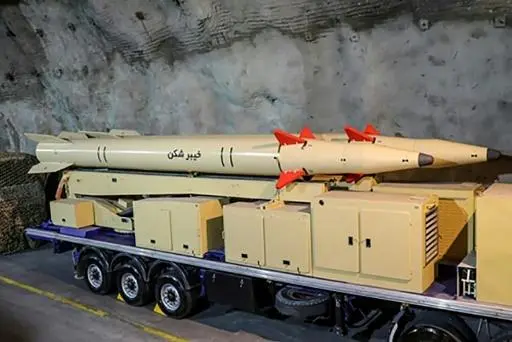
The American conservative think tank Middle East Forum warns that Iran still lacks the refined capability to launch missiles from protected silos, relying on exposed mobile platforms. If activated, it faces refueling and preparation processes that can take hours, making interception easier.
Nevertheless, the threat is real: the mere scenario of Iran potentially overwhelming Israel's defense system — the Iron Dome and other interceptors — forces the reinforcement of alliances, deployments, and defense strategies against a possible massive attack.
In the coming months, the international community will closely observe Iran's ability to turn its rhetoric into action and how Israel and its partners will act to prevent or neutralize this scenario.
This action-reaction dynamic turns the Persian Gulf and the Levant into a latent zone of major confrontation, where declared capabilities can quickly lead to escalations.
For now, no official Iranian document confirms an immediate deployment of such capabilities, and some analysts believe Iran would still need time to achieve the volume of launches and logistics of this magnitude.
Jerusalem, November 17, 2025 – Total News Agency-TNA – The Islamic Republic of Iran is intensifying its missile production with the declared goal of launching up to 2,000 projectiles simultaneously against Israel in a potential new conflict, a marked escalation compared to the nearly 70 it fired during the 12-day war between the two countries in June.
For Jerusalem, the determination is to maintain the initiative, carry out preemptive attacks on the Iranian missile system, and continue ensuring air superiority.
Israel's military-industrial complex and its American allies are acting swiftly on indications that Tehran has increased not only missile production but also the acquisition of precursors, Chinese technology, and improvements in maneuverability and defense evasion.
Although the Iranian strategy harbors technical, logistical, and tactical limitations, its proclaimed goal of 2,000 simultaneous missiles represents more than a figure: it is a signal of intent and a warning to Israel and the United States that the regulation of the conflict could change.
The announcement has set off new alarms in Jerusalem and Washington regarding the capacity for deterrence and intervention in the region.
According to a report in The New York Times, Iranian officials indicated that their missile factories are working “24 hours a day” in order to achieve a massive attack capability aimed at “disabling Israel” in a single blow.
The data, cited by the International Crisis Group, was provided by its Iran program director, Ali Vaez, who emphasized that the regime sees the resumption of hostilities as “a matter of time.”
During the June confrontation, Iran managed to launch approximately 500 missiles, while Israel employed aerial countermeasures that quickly liquidated Iranian mobile launchers and besieged targets through advanced intelligence.
That lightning war revealed that while the declared capability is high, its execution is limited by Israeli air superiority, the vulnerability of mobile launchers, and the logistical complexity of liquid-fuel weapons.
Independent experts interpret the Iranian threat as more of a psychological campaign than a mature operational plan.
However, the mere fact that it is declared publicly already constitutes a destabilizing factor.