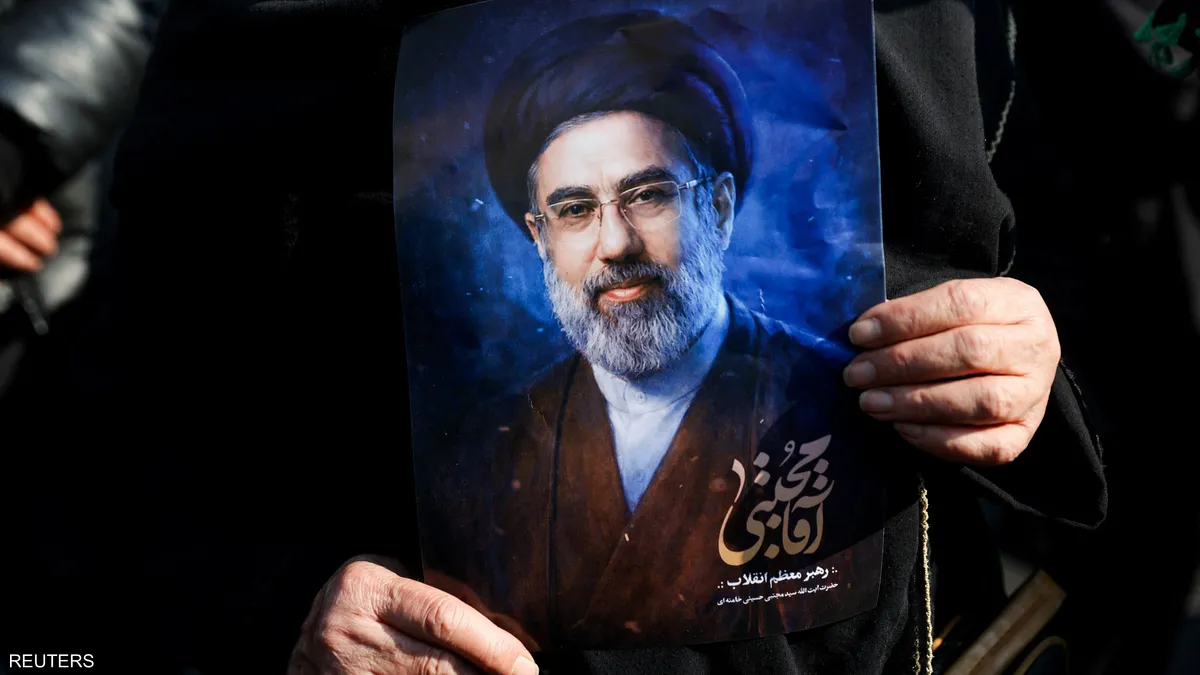
Reuters was unable to independently verify these reports. There is still significant uncertainty surrounding the location of Khamenei, his condition, and his ability to rule, as no photo, video, or audio recording of him has been published since the airstrike that followed his appointment as his father's successor on March 8. Iran's mission to the United Nations did not respond to Reuters' questions about the extent of Khamenei's injuries or why he has not appeared in any photos or recordings. Two of them said he participates in meetings with senior officials via conference calls and is involved in decision-making on key issues, including the war and negotiations with Washington. The question of whether Khamenei's health allows him to run the country at a time when Iran is facing its most serious crisis in decades comes as peace talks, whose outcome is unpredictable, begin in the Pakistani capital of Islamabad on Saturday. Reports from Khamenei's inner circle provide the most detailed description of the leader's condition in weeks. Three sources close to the inner circle of Iran's new leader, Mustafa Khamenei, told Reuters that he is still recovering from severe injuries to his face and leg sustained in an airstrike that killed his father at the start of the war. The three sources said Khamenei's face was disfigured in the attack on a complex in central Tehran, and he suffered serious injuries to one or both legs. However, the three sources, who asked not to be named due to the sensitivity of the matter, noted that the 56-year-old is recovering from his injuries and still retains a high level of mental acuity.