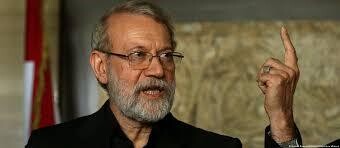
By conditioning any negotiation on the non-existence of Israel, the Iranian regime places a practically insurmountable obstacle for international diplomacy. Consequently, the region remains trapped in a spiral of attacks and reprisals, while mediation efforts attempt to prevent the crisis from transforming into an even broader conflict that would compromise the stability of the Persian Gulf, global energy routes, and the strategic balance of the entire Middle East. For international analysts, this position not only complicates any attempt at mediation but also reinforces the ideological narrative that the regime uses to justify its regional strategy. The Supreme National Security Council, an agency formally chaired by the Iranian president but ultimately accountable to the Supreme Leader, is one of the key centers for decision-making in foreign policy and defense. Its resolutions usually reflect the consensus among the military, religious, and political sectors that make up Iran's power structure. The stance expressed by Larijani also reflects the weight of the Islamic Revolutionary Guard Corps, the powerful parallel military force that plays a decisive role in Iran's regional policy and maintains operational ties with militias and armed organizations in various points across the Middle East. Meanwhile, mediation attempts continue. The sultanate has historically been one of the few reliable diplomatic channels between the two capitals, even during moments of maximum tension, as was the case in the years leading up to the 2015 nuclear agreement. However, the Iranian regime's response suggests that, for now at least, the political leadership in Tehran is unwilling to explore a negotiated settlement if the dialogue table implicitly includes recognition of Israel as a regional actor. The possibility of opening a negotiation channel depends largely on Tehran's willingness to soften its stance, something that for the moment seems distant. The words of Iran's national security chief confirm that the conflict is not limited to a military or territorial dispute but is also traversed by a profound ideological confrontation.
Tehran- March 11, 2026- Total News Agency-TNA- The head of Iran's Supreme National Security Council, Ali Larijani, stated that the Iranian regime received messages from the President of the United States through the Sultanate of Oman requesting to open negotiations for a ceasefire, but affirmed that Tehran rejects any dialogue as long as the State of Israel exists, a declaration that exposes with raw clarity the level of political radicalization that the conflict in the Middle East is going through. "Tonight we have received messages from the President of the United States, transmitted by the Omani mediator, requesting that we negotiate a ceasefire," stated Larijani in comments broadcast by Iranian media. However, the official was categorical in setting the regime's position: "We will not accept any negotiation as long as there is an entity called Israel." The phrase, laden with geopolitical implications, reinforces the historical stance of the ayatollahs' regime, which since the 1979 Islamic Revolution has upheld an official policy of confrontation with Israel and has supported armed organizations operating against that country, including Hezbollah in Lebanon and Hamas in the Gaza Strip. Larijani's statements come in a context of increasing military pressure on Iran following attacks launched by the United States and Israel against strategic regime installations. In recent days, the military escalation included bombings against Iranian military targets, naval clashes in the Persian Gulf, and attacks on energy infrastructure that set off alarms in international markets. In that scenario, Oman has once again played its traditional role of a discreet mediator between Washington and Tehran. Various regional and European actors are maintaining diplomatic contacts to prevent the conflict from escalating into an open war that would involve more countries in the region.