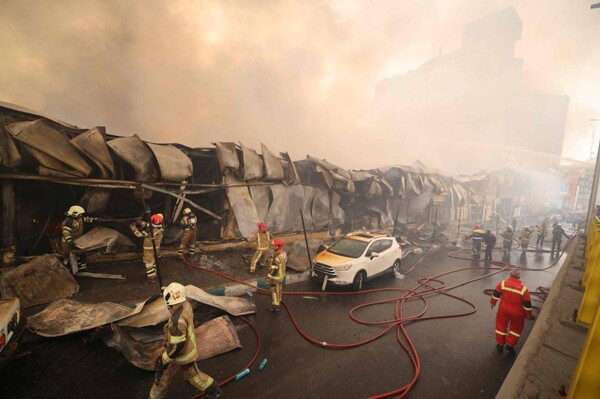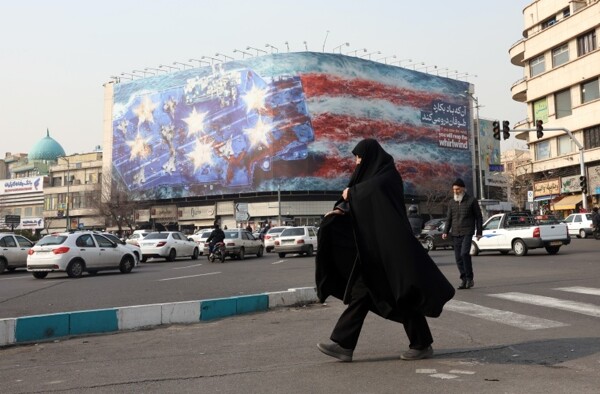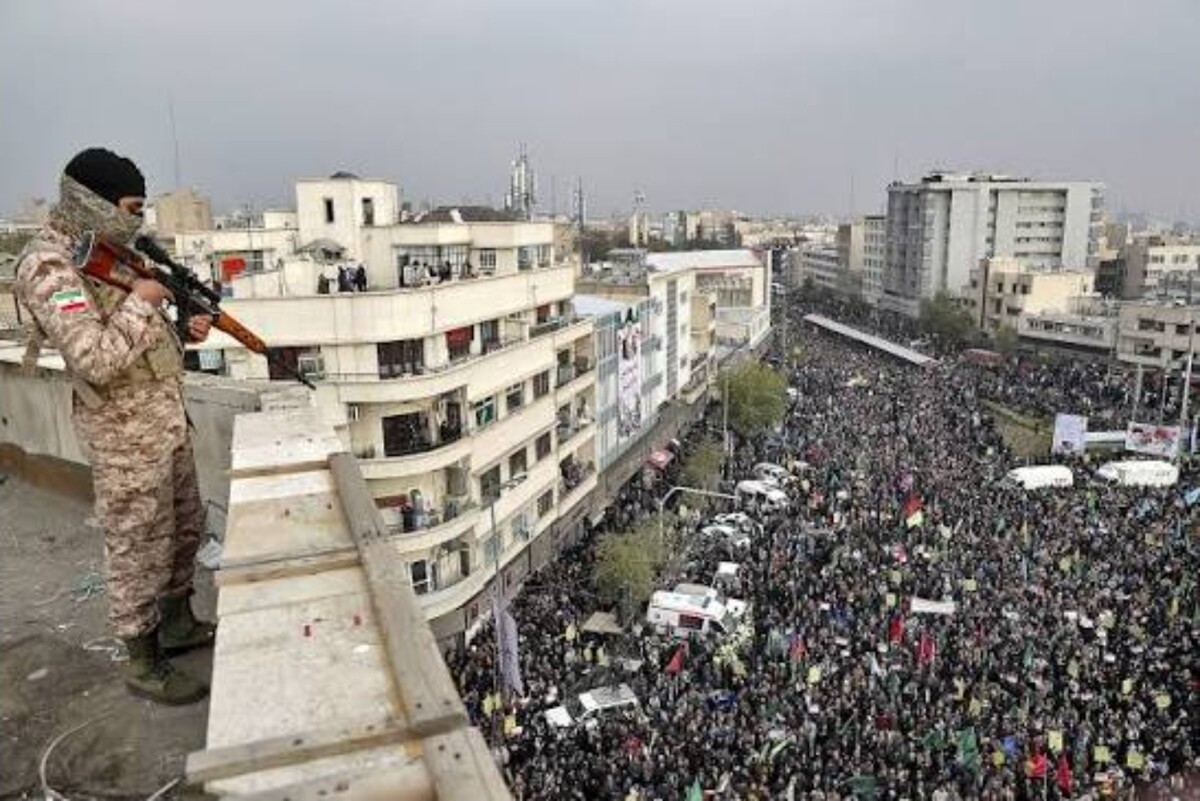
In Tehran, several students were preventively detained by security personnel and released hours later in an attempt to prevent academic protests from spreading. In this context, broader political slogans began to be heard. The protests, which began due to the collapse of purchasing power and the rise in prices, quickly transformed into a direct political challenge to the regime. In Tehran, traders from the historic Grand Bazaar and the central Republic Street went on strike and held demonstrations against the rising cost of food and the economic stagnation. Minutes later, the president reinforced the message by stating that Washington is “prepared and ready to act,” without specifying the type of response his administration might adopt. The statements came after a particularly violent day in several Iranian cities. General inflation stood at 42.2%, a figure that rapidly erodes people's incomes and deepens discontent. International analysts agree that this wave of protests represents the biggest internal challenge for the Iranian regime since 2022, when the death of Mahsa Amini in police custody triggered nationwide demonstrations that left hundreds dead. The U.S. leader's message significantly increased international tension surrounding Iran's internal crisis, already marked by deaths, street clashes, and a rapid deterioration of the social situation. The warning was issued by Trump through his Truth Social platform, where he stated that “if Iran shoots and violently kills peaceful protesters, as is its custom, the United States of America will come to their rescue.” In some neighborhoods of the capital, security forces used tear gas to disperse protesters, while reports of arrests and nighttime clashes multiplied. Media linked to the Iranian security apparatus confirmed deaths in various provinces. This collapse accelerated social unrest and expanded the scope of the protests. On Tuesday, protests spread to key cities such as Isfahan, Shiraz, Mashhad, Kermanshah, and Hamadan. Washington, January 2 – Total News Agency-TNA- U.S. President Donald Trump warned this Friday that his country is “ready and prepared” to respond directly if the Iranian regime lethally suppresses the protesters who have been leading massive protests for days against the economic collapse and hyperinflation hitting the Islamic Republic. This turn marked a hardening of the opposition's discourse and raised alarms in the regime. The economic crisis appears to be the main trigger for the social outbreak. Trump's direct warning now introduces a new factor of external pressure, with the risk of escalating the conflict beyond Iran's borders if repression intensifies. In parallel, state television reported the death of a security member during disturbances recorded in Kouhdasht, in the west of the country. The protest movement also incorporated university sectors. On Thursday, clashes between security forces and protesters were recorded in different parts of the country, with an initial toll of at least six dead, according to official information and reports from local media. Tension increased when the Iranian currency reached a new negative record, trading at around 1.42 million rials per dollar, the weakest level in its history. The Fars agency, close to the Islamic Revolutionary Guard Corps, reported that two people died in clashes with security forces in the city of Lordegan, in the province of Chaharmahal and Bakhtiari, and three others in Azna, in neighboring Lorestan. Some protesters openly expressed their support for the restoration of the monarchy, under the leadership of Crown Prince Reza Pahlavi, son of the last shah, overthrown in the 1979 Islamic Revolution. According to official statistics, food prices in December were 72% higher than a year earlier, while the costs of supplies and medical services increased by 50%. Students in Tehran and other cities held rallies on campus, defying internal controls.