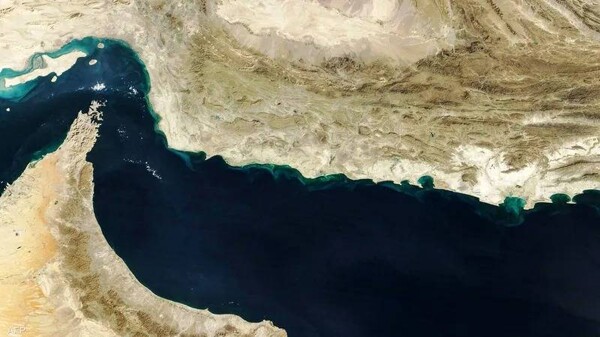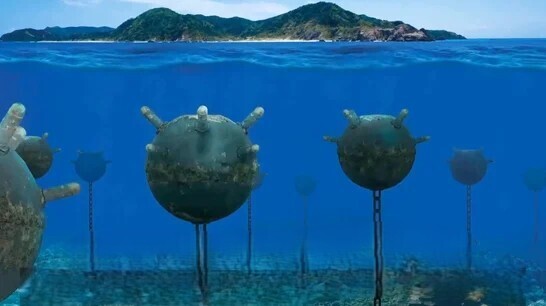
The war of naval mines ceases to be a technical matter for naval specialists and becomes a central variable of Western security. Moreover, the crisis forces us to look beyond oil. When a fifth of the world's oil is at stake, no local crisis is possible: everything becomes global. In other words, green energy could stop being presented only as a climate flag to be seen again as a matter of sovereignty. With the Strait of Hormuz under maximum tension, the scene is clear: Iran retains a cheap and disruptive tool; the United States wants to avoid an inflationary shock and a naval quagmire; and Europe, with its experience and muscle in maritime demining, could become a more necessary piece than many imagined just a week ago. In recent hours, international reports indicated that Iran may have placed about a dozen mines in the area and the United States said it had attacked and destroyed 16 Iranian vessels linked to the mining. They can cost just a few thousand dollars and yet immobilize or destroy ships worth hundreds of millions. Iran had resorted to that logic during the so-called 'Tanker War' in the 1980s, when it sowed mines in these same waters to interfere with regional traffic. For decades, naval mines have been one of the cheapest and most effective tools of asymmetric maritime warfare. This fear explains Washington's sensitivity to Iranian threats and also the pressure to prevent the conflict from escalating into a de facto closure of the passage. European navies concentrate one of the most important capabilities of the West in mine warfare, with extensive experience in minesweepers, minehunters, explosive ordnance disposal, and maritime route clearance operations. NATO in fact maintains two permanent naval groups dedicated to mine countermeasures, integrated by specialized ships from several allied countries. According to what Total News Agency was able to learn from confidential sources, a group of European nations, led by the United Kingdom, has about two hundred platforms between minesweepers, minehunters, and systems linked to that mission, although the real availability for a rapid deployment is always less than the gross number. Thus, Europe could become necessary for the United States if the objective is to quickly minimize the effects of extensive mining of Hormuz without overloading the US Navy. This datum reopens a deep geopolitical discussion. Therefore, any severe alteration in that route would not only drive up the price of oil, but also logistics costs, inflation, and the energy security of half the world. For the Donald Trump administration, the problem is as military as it is economic. The precedent still weighs because it left a lesson that still orders regional deterrence today: touching the oil flow of the Gulf can trigger a large-scale military response. But the most interesting point of this new crisis is not only in Washington or in Tehran, but also in Europe. If the passage remains under recurrent threat, not only will the barrel become more expensive: pressure will also grow to diversify routes, reinforce strategic reserves, accelerate alternative infrastructures, and, in some countries, to again discuss the value of an energy transition less dependent on military bottlenecks. In recent years, Europe replaced much of its dependence on Russian gas and oil with greater exposure to energy flows from the Gulf. At the same time, the US Navy has warned that it is not in a position to guarantee permanent escorts for commercial navigation, a fact that reveals the operational complexity of the scenario. The threat is not new. It is not an exaggeration: through that corridor in 2024 and early 2025 more than a quarter of the world's maritime oil trade and around a fifth of the global consumption of oil and derivatives, as well as a similar portion of the world's LNG trade, passed. By Daniel Romero Buenos Aires - March 12, 2026 - Total News Agency - TNA - The threat of a possible mining of the Strait of Hormuz by Iran has once again placed one of the most sensitive maritime passages in the world at the center of the Middle East crisis. A blockade, even a partial one, would affect energy, transport, and food almost immediately, with a direct impact on US inflation. If Hormuz becomes unstable, the cost will not only fall on Asian refineries or the American consumer, but also on a European continent that has already learned, with the war in Ukraine, what it means to underestimate the strategic dimension of energy. The consequence is evident: one dependence was changed for another. In 1988, after the US frigate USS Samuel B. Roberts was seriously damaged by an Iranian mine, the United States launched Operation Praying Mantis, a large-scale naval retaliation that harshly struck Iranian targets in the Gulf.