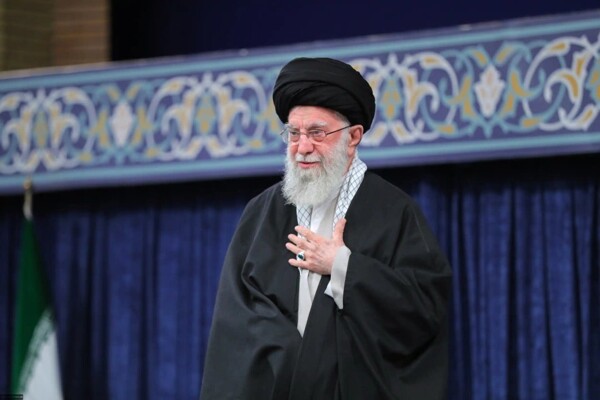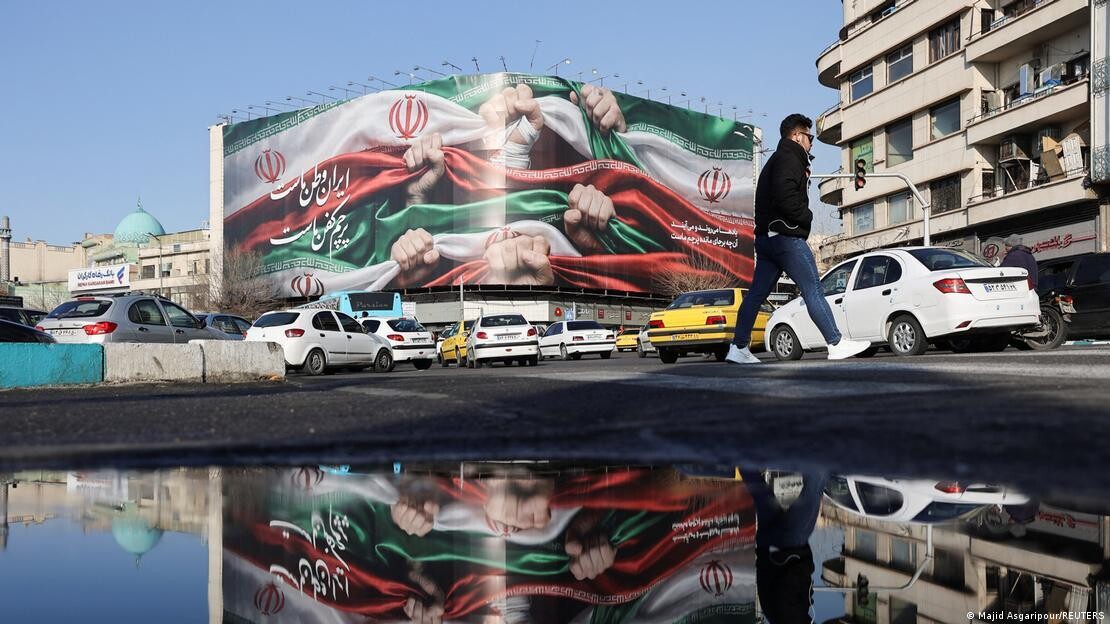
Iran is going through one of the most fragile internal periods in recent decades, marked by a deep economic crisis, massive protests, and a complex web of ethnic and territorial tensions that the regime has failed to resolve. State violence shocked broad sectors of society, especially a young generation hit by unemployment, inflation, water scarcity, and a lack of future prospects. Other sources speak of more than 35,000 dead. Although from the outside Iran is often perceived as a homogeneous country, the internal reality is much more complex. The protests of the 'Woman, Life, Freedom' movement also flared up strongly in this province, especially in the capital, Zahedan, where repression was particularly harsh and led to mass arrests and death sentences. Thus, Iran's internal mosaic exposes a structural fragility that goes beyond the current economic situation. However, this identity never managed to fully absorb the demands of minorities, especially in border regions, where accusations of structural discrimination, underdevelopment, and systematic repression persist. The regime bases its legitimacy on ideological loyalty to the Islamic Republic rather than on ethnic origin. The strategic rapprochement between Azerbaijan and Israel in recent years is perceived in Tehran as a direct threat. Another critical point is the province of Sistan and Baluchestan in the southeast of the country. With an estimated population of nine to twelve million people, mostly Sunni, Iranian Kurds maintain strong cultural ties with communities in Iraq, Turkey, and Syria. In the event of unrest in these areas, Tehran coordinates security actions with neighboring countries, particularly with Turkey. In the northwest, the provinces of West and East Azerbaijan concentrate another source of tension. It is a multinational and multi-ethnic state where not all Iranians are Persians and not everyone shares the same religious identity. The combination of social crisis, unresolved ethnic tensions, and a state response based almost exclusively on coercion presents a scenario of persistent instability, whose outcome remains uncertain and has the potential for regional impact. Sources consulted: Deutsche Welle; Reuters; international human rights organizations; academic reports on minorities in Iran; European media specializing in the Middle East. It is estimated that around 18 million Iranian citizens have Azerbaijani origins. Nevertheless, territorial tensions do not disappear and resurface with force every time a national crisis erupts. Recurrent protests reveal a growing rejection of the political system, but also a structural weakness of the opposition: there is no unified alternative capable of articulating social discontent into a common political project. The government watches with concern movements that promote the idea of an independent 'Southern Azerbaijan,' while in Baku there are nationalist sectors that push for the concept of a 'Greater Azerbaijan' that would include Iranian territories. After the Arab conquest in the 7th century, Islam consolidated in the territory, but the Persian language survived as the core of cultural identity. Kurdish regions are often the epicenter of protests, as happened after the death of the young Jina Mahsa Amini in 2022, detained in Tehran for a supposed violation of hijab norms. The area, bordering Pakistan and Afghanistan, is considered difficult to control and is crossed by fuel and drug smuggling. Later, in the 16th century, the Safavid dynasty established Shia Islam as the official religion, deliberately differentiating Iran from the Sunni Ottoman world. In 1935, the country officially adopted the name 'Iran' to replace Persia, with the objective of reinforcing a modern national identity. In parallel, state media insist on warning about alleged separatist plans that, according to the official discourse, would seek to plunge the country into chaos and provoke a civil war. One of the most sensitive areas is the Kurdish territory. Proof of this is that key figures in power are not Persians: Supreme Leader Ali Khamenei is of Azerbaijani origin; the current president Masoud Pezeshkian has Kurdish and Azerbaijani roots; and Ali Shamkhani, a strategic advisor to the religious leader, is of Arab origin. In late December 2025, a new economic collapse triggered large-scale demonstrations in different regions of the country, to which the authorities responded with temporary internet cuts and unprecedented repression. According to official figures released by Tehran, the repression left at least 3,117 dead, including members of the security forces. Some three million Sunni Baluchis live there, in one of the poorest and most marginalized regions of Iran. However, international human rights organizations and independent sources maintain that the real number of victims would be significantly higher.