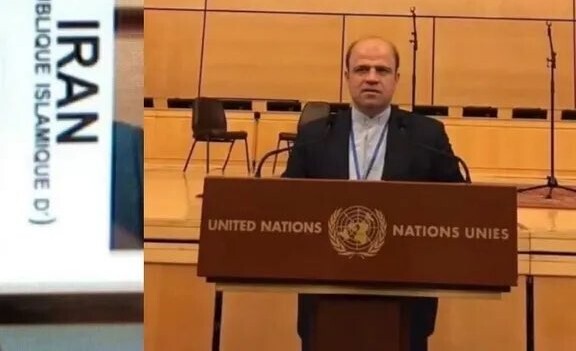
Geneva, January 19, 2026 - A high-ranking official of the Permanent Mission of the Islamic Republic of Iran to the United Nations and other international organizations in Geneva has left his post and applied for political asylum in Switzerland, a move analysts and opposition describe as a new sign of the growing internal fracture within Tehran's theocratic regime. Alireza Jeyrani Hokmabad, who held the rank of Minister-Counsellor and served as the number two of the Iranian delegation to the European headquarters of the UN, formally submitted his request for refuge along with his family to the Swiss authorities after leaving his diplomatic functions in Geneva, according to diplomatic sources cited by international media. While such matters are usually handled discreetly, diplomatic sources indicated that some governments might be considering relaxing the acceptance criteria for these requests, particularly when there are indications of personal or political risk. Analysts in international relations point out that a defection of this magnitude, where a high-ranking diplomat opts to seek protection outside their country of origin, has a significant symbolic impact. In addition to internal tensions, the international community has intensified its focus on human rights violations in Iran and demands for greater respect for civil liberties from the central government in Tehran. Meanwhile, Jeyrani's situation in Switzerland continues to be the subject of diplomatic attention. Given Iran's strategic role on the regional and global stage, the decision of an experienced official who has participated in multilateral forums such as those linked to the United Nations could influence the external perception of the regime's internal stability and its ability to maintain cohesion within its foreign service. The Iranian diplomatic mission in Geneva, which acts as the primary liaison with numerous multilateral organizations and international forums—including those focused on trade, development, and investment—has faced additional pressures in recent months. Sources from the opposition and external commentators have interpreted Jeyrani's defection as part of a broader pattern of internal wear and tear within Iran's state structure, although other analysts warn that a single high-level diplomatic defection does not necessarily herald an imminent regime collapse. Several European countries, according to reports, have observed an increase in the number of Iranian diplomats exploring or applying for asylum in the countries where they are accredited, motivated by fears of reprisals upon returning to Iran, as well as by the escalation of international pressure in response to protests and the government's internal policies in Tehran. Jeyrani had joined the mission in 2017 as an advisor and over the years had consolidated a key role in Iran's economic and commercial relations with UN multilateral organizations. The outcome of this process will be closely watched by the international community, human rights groups, and political actors both inside and outside Iran. The lack of official confirmation adds to the caution with which Bern handles protection requests related to high-profile diplomatic and political cases. The diplomat's gesture comes in the context of intense protests and social upheaval in Iran, where sectors of civil society and broad segments of the population have demonstrated against the clerical leadership and the ruling elite. Nevertheless, he decided not to return to his country, citing fears for his personal security and the deterioration of the political structure in the Islamic Republic. Representatives of the Swiss government, including instances from the Federal Department of Foreign Affairs and the State Secretariat for Migration, have not issued public statements regarding Jeyrani's asylum application or the status of its processing. While awaiting a formal resolution on his asylum application, the case could set a precedent for how Western governments respond to refuge requests from high-ranking officials from states with internal political tensions.