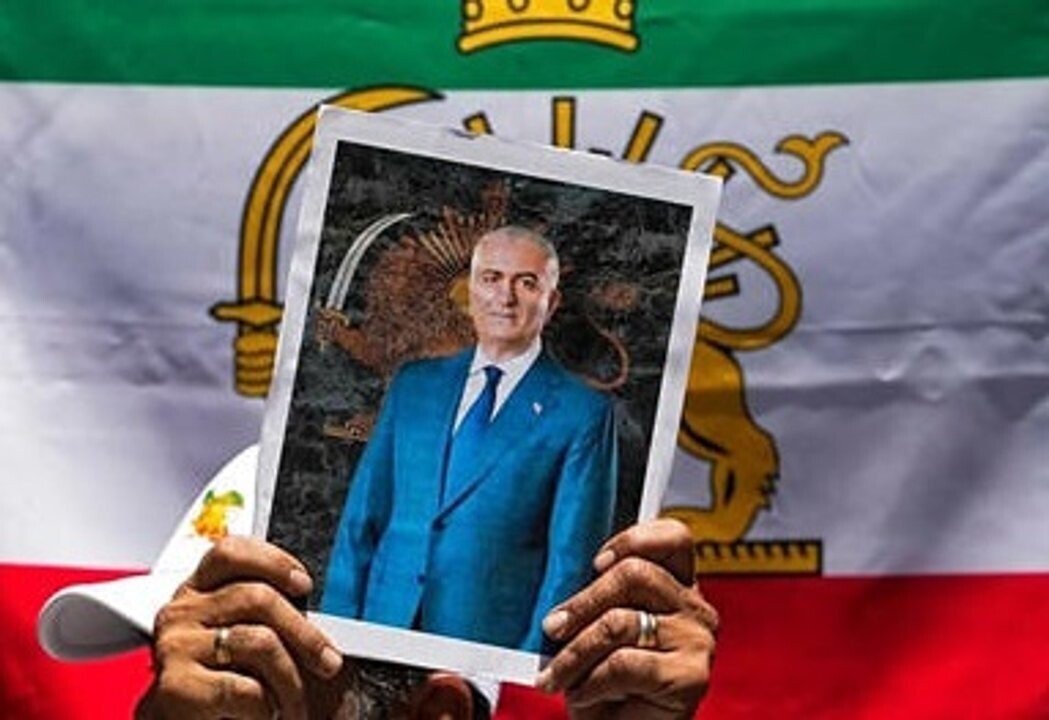
The Islamic Republic will fall, not if, but when, said Reza Pahlavi at a press conference in the U.S. capital. Exiled 45 years ago, he said, "I will return to Iran." Pahlavi has lived in exile in the United States since the 1979 Islamic revolution overthrew his pro-Western father. Many protesters chanted Pahlavi's name during massive protests that swept through Iran and were violently repressed by the Tehran regime. At least 2,572 people died in the crackdown, according to human rights organizations, although some sources claim the death toll could reach 15,000. Despite his detractors, Pahlavi declared that he wants to serve as a ceremonial figure to lead the transition to a secular democracy. Pahlavi repeatedly called for the intervention of U.S. President Donald Trump, who ultimately did not act despite several warnings to Tehran. Outside Iran, it is very common to see portraits of Pahlavi at international protests against the regime, which have been going on for years. He has been the leader since 2013 of an organization called the National Iranian Council for Free Elections. This is a political apparatus through which they are building an alternative to a regime that today seems more vulnerable than ever. Meanwhile, Trump is planning to act against the ayatollahs, who seem willing to negotiate with the U.S. leader. The extent of the external opposition to the regime is also not very clear, neither from Pahlavi nor from other organizations with different interests. The prince has been speaking in public for half a century in favor of a regime change, but even Trump is not clear that he is a relevant figure for a possible transition, beyond having spoken to Pahlavi once and considering him "a good guy." Reza Pahlavi has not set foot in Iran for 48 years. The Crown Prince of Persia [shahzadeh] was in Texas when the Islamic Revolution, which overthrew his family and changed the Iranian regime, found him. Pahlavi had arrived in the North American country in the fall of 1978 to complete his combat pilot training under the supervision of his stepfather, the fruit of his mother's third marriage. Another step in the international training he received from birth as the first male in the line of succession in 1960, the fruit of his father, the Shah of Persia Mohammed Reza's, third marriage with Farah Diba. His parents would arrive in the United States a few months later, in January 1979, fleeing the inevitable. This was the apparent end of a dynasty as brief as it was turbulent, from 1925 to 1979. The Shah's twilight The Pahlavis, despite their lavish hospitality to Western royalty and dignitaries, were abandoned by their Western allies—who also knew the Shah was dying of cancer—while Khomeini took Tehran unopposed. The title chosen by Mohammad at his self-coronation in 1967, Shahanshah, King of Kings—recovered from that Shapur I who humiliated Rome at the head of the Persian Empire in the 3rd century—proved antiprophetic. Mohammad would die in Egypt in 1980. Washington, January 17, 2026 (NA) -- Protests that have spread across Iran since December 28 continue unabated, and according to human rights organizations, have already left a balance of hundreds dead, thousands detained, and executions linked to the demonstrations. Initially, the demands were economic, due to the collapse of the Iranian currency, the rial, and the rise in food and fuel prices, as reported by the Noticias Argentinas agency. But as the days went by, the protests shifted to directly questioning the political and religious system that has governed the country for more than four decades. The repression hardened, and when U.S. President Donald Trump had practically decided to intervene militarily in Iranian territory, he backed down at the last minute. The son of the late Shah of Iran, who resides in Washington, came out to say that he trusts that the Islamic Republic will fall amid massive protests and called for international intervention. By then, Khomeini and his ayatollahs had already abolished by decree all titles of the family, so his son's self-proclamation in exile as Shah, under the name of Reza II, did not get very far. To the point that he is still referred to as the Crown Prince, and even he himself ended up renouncing that youthful outburst.