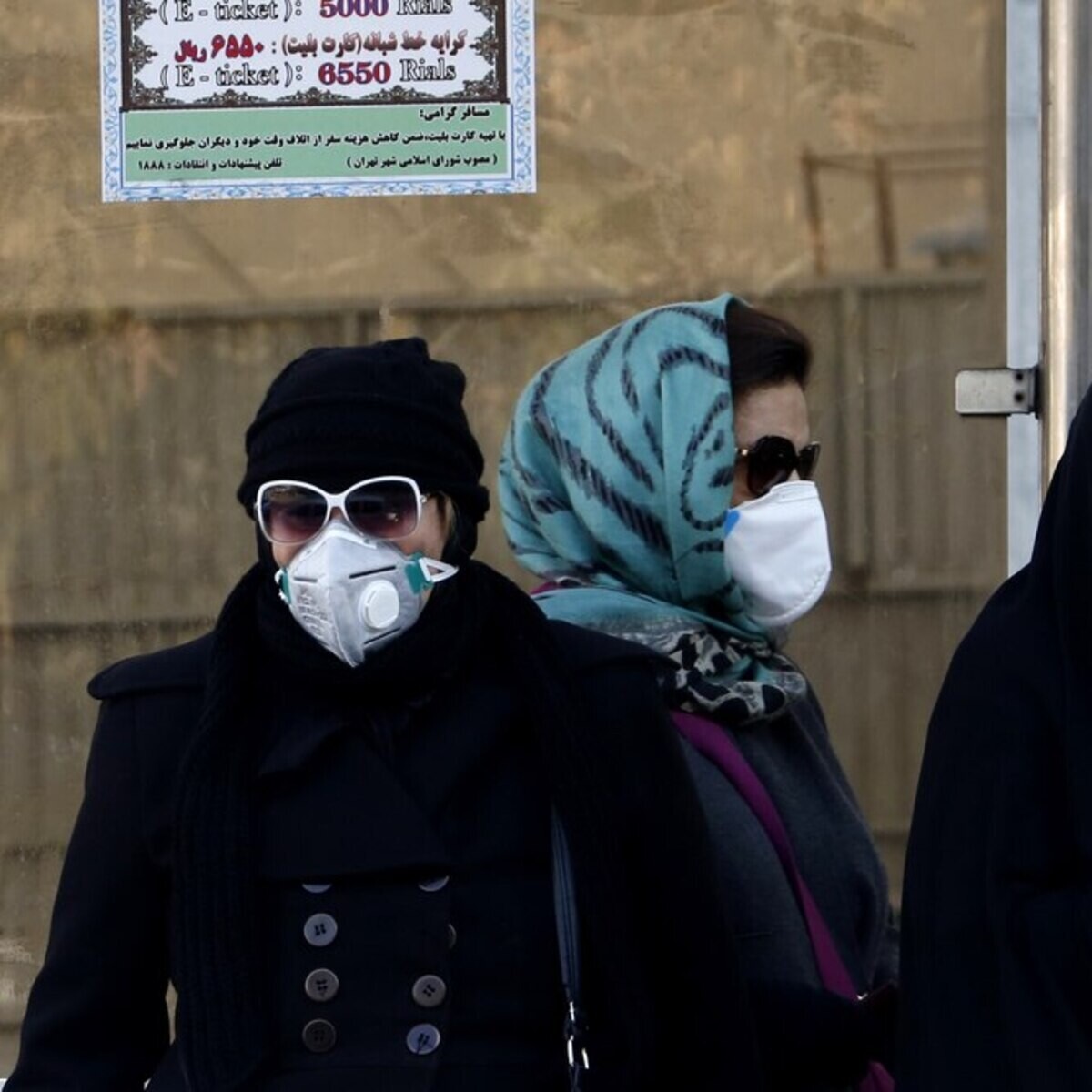
Tehran, December 17, 2025 — Iran is facing one of the worst air pollution crises in its recent history, with pollution levels reaching 'harmful and dangerous' to public health in several of its major cities, including Tehran, Mashhad, Isfahan, and Ahvaz. Analysts point out that the lack of effective implementation of already-sanctioned environmental laws, combined with state priorities focused on security forces, military programs, and military spending, aggravates the impact on thousands of citizens, especially children, the elderly, and people with pre-existing conditions. The crisis also reflects a central conflict within the Iranian system: the tension between recognizing urgent problems affecting the population's daily life and the regime's tendency to perceive any criticism as a threat to its internal stability. In many cases, this leads to the criminalization of experts who warn about the magnitude of environmental damage and its health and economic consequences. International organizations, including human rights observers, have condemned restrictions on freedom of expression in Iran and urged the government to allow an open debate on essential public policies such as environmental management, air quality, and public welfare. This judicial repression is not an isolated incident in Iran, where environmental activists and human rights defenders regularly face criminal charges, arbitrary detentions, and severe judicial proceedings for expressing dissenting opinions. Public health entities have warned that the air pollution crisis in Iran has caused a significant number of hospitalizations due to respiratory and cardiovascular diseases, and that temporary measures like school closures or vehicle traffic restrictions are insufficient without structural environmental improvement policies. The combination of highly polluting fuels, poor energy management, neglect of environmental policies, and questionable state priorities has multiplied the effects of smog, leading to a surge in respiratory illnesses and increasing public indignation, even amidst the severe restrictions on freedom of expression imposed by the Islamic regime. According to specialized reports on the crisis, the continued use of mazut and fuel oil—fuels with extremely high sulfur and particle content compared to international standards—has been one of the main causes of the deterioration of air quality in Iran during the coldest months of 2025. The lack of investment in natural gas infrastructure and dependence on polluting energy sources have been cited by analysts as a structural factor in the crisis. One of the most notable critics of this reality has been Esmail Kahram, an environmental activist and former advisor to Iran's Environmental Protection Agency, who has sharply questioned the priorities of the theocratic regime. Kahram highlighted that the high military investment—such as the estimate that each Iranian missile would cost around two million dollars—contrasts with the meager allocation of resources for the energy transition and policies to reduce polluting emissions. Instead of opening a space for dialogue or implementing urgent structural reforms, Iranian judicial authorities brought charges against Kahram for alleged 'attack on national security,' along with the editor-in-chief of the Jamaran website for disseminating his statements. However, the advance of repressive measures and the scarcity of deep reforms augur a scenario in which environmental degradation remains subordinate to political and military priorities, with increasingly severe human, social, and economic costs. According to environmental defenders, the poor quality of fuel, the age of the vehicle fleet, and the lack of efficient environmental control mechanisms have worsened the situation, where fuel oil contributes disproportionately to smog in densely populated urban areas. The regime's response to these expressions of criticism has been forceful.